

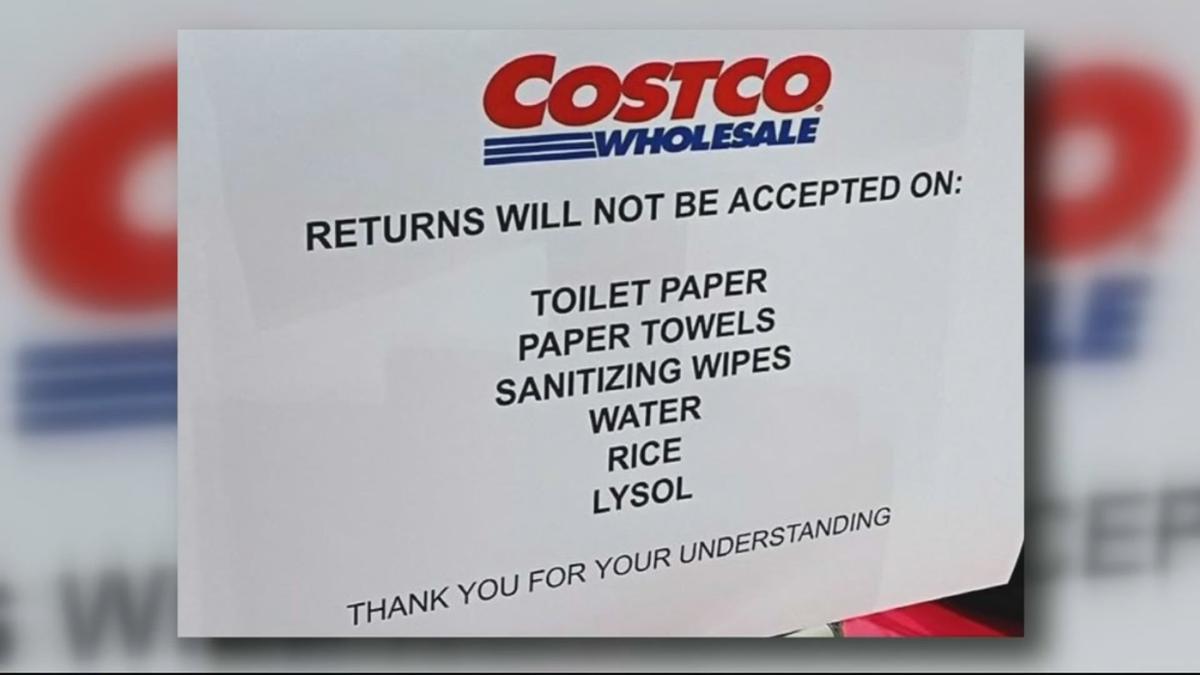
Costco not accepting returns on toilet paper, sanitizer, other items
PHOENIX (3TV/CBS 5) – If Costco customers have regret about hoarding popular items like toilet paper, hand sanitizer, and paper towels, they’re out of luck.
The big-box store confirmed to Arizona’s Family it will not issue returns for things bought in bulk during the coronavirus panic. Costco added customers can visit their local warehouse for details on the developing situation.
Costco didn’t say why it changed its usual flexible return policy but part of it may be for safety. According to the Centers for Disease Control and Prevention, the coronavirus can live on plastic or hard materials for up to three days and on cardboard for up to 24-hours.
The warehouse stores have also been very busy with customers lining up outside of the store, so workers may not have time to handle returns.
Photos posted on social media from Costco fan sites like Costco Insider and Costco Buys showed the items unable to be returned are toilet paper, paper towels, sanitizing wipes, water, rice and Lysol. Many people praised the move on Instagram.
“Serves hoarders right. I worked retail during the Y2K panic and we had to do the same thing,” one commenter said.
“It kinda puts them in their place. Like, you can’t be doing that! Taking advantage of people during a national crisis,” another customer said.
Photo Credit: CBS News
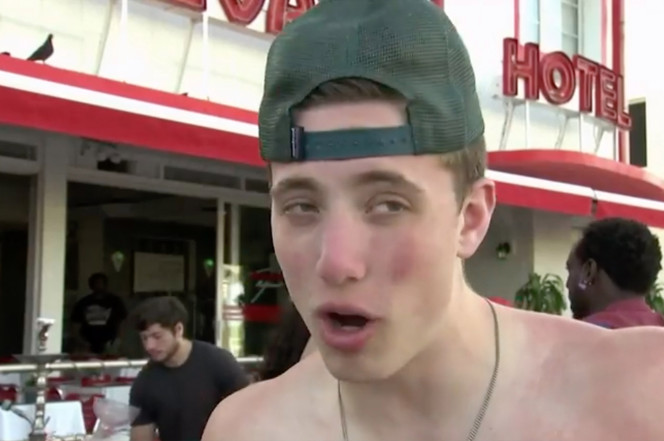
Spring breaker apologizes for infamous ‘if I get corona,’ remark
A spring breaker from Ohio who went viral last week for downplaying the coronavirus outbreak while partying in Miami has apologized for his remarks.
“I would like to sincerely apologize for the insensitive comment I made in regards to COVID-19 while on spring break,” Brady Sluder wrote in a Sunday Instagram post.
Sluder became the face of defiant spring breakers in The Sunshine State when he told Reuters that he would not let the global pandemic interfere with his planned trip.
“If I get corona, I get corona,” Sluder said in the interview, which was also filmed and broadcast on countless cable networks across the country.
“At the end of the day, I’m not going to let it stop me from partying,” he said.
By Sunday, however, with time to reflect, Sluder issued a wordy apology.
“I wasn’t aware of the severity of my actions and comments,” said Sluder. “Our generation may feel invincible, like I did when I commented, but we have a responsibility to listen and follow the recommendations in our communities.”
At the time Sluder and his pals were reveling, the Centers for Disease Control and Prevention had already advised people to remain roughly 6 feet apart from each other to help curb the spread of the the illness. President Trump had also recommended avoiding gatherings of 10 or more people.
Sluder on Sunday said he understands the severity of the virus and its potentially deadly effect on elderly people.
“I’ve learned from these trying times and I’ve felt the repercussions to the fullest,” he wrote. “Unfortunately, simply apologizing doesn’t justify my behavior. I’m simply owning up to my mistakes and taking full responsibility for my actions.”
via: https://nypost.com/2020/03/24/spring-breaker-apologizes-for-infamous-if-i-get-corona-remark/
Photo Credit: nypost.com
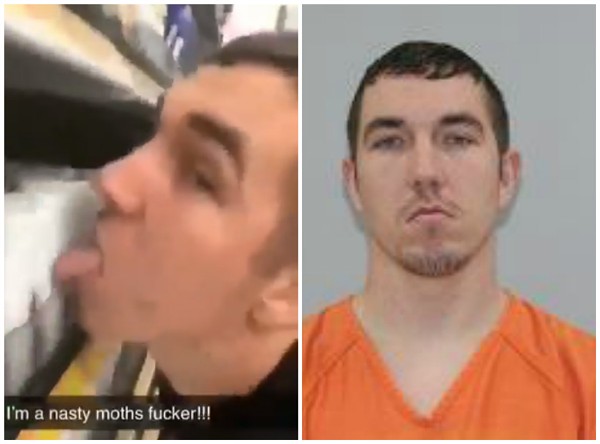
Missouri Walmart Coronavirus Licker Charged With ‘Terrorist Threat’
A Warrenton man was charged with making a terrorist threat after he filmed himself licking bunch of items at Walmart.
“Who’s afraid of the coronavirus?” Cody Pfister, 26, taunts in a video he later posted to social media.
The video spread around the world, and Warrenton police said in a statement the department had been contacted by people in the Netherlands, Ireland and the United Kingdom.
We take these complaints very seriously and would like to thank all of those who reported the video so the issue could be addressed,” police said in the statement.
The video appears to have been filmed on March 11 at the Warrenton store, according to court records. Pfister was taken into custody this week, and Warren County prosecutors charged him today. The charge is a low-level felony.
Bizarrely, he’s not the first person to get in trouble with police for licking surfaces as public health officials beg people to wash their hands, keep at least six feet apart and avoid touching their faces in hopes of slowing the spread of COVID-19. The manager of a grocery store in Wisconsin called police after a woman licked the door handle to a freezer, reportedly to protest the virus, while a manager was disinfecting the store, Newsweek reported.
There have been more than 44,000 confirmed cases of the coronavirus and more than 500 deaths in the United States, according to the Centers for Disease Control and Prevention. The city of St. Louis announced its first death, a woman in her 30s, just yesterday.
Pfister was booked into the Warren County jail without bond. He has previous convictions for burglary, theft of a firearm, drug possession and driving while intoxicated.
Photo Credit: WARRENTON COUNTY POLICE

First gas station in Tennessee drops to 99 cents per gallon
NASHVILLE, Tenn. (WZTV) — Gas has officially dropped below a dollar in Tennessee.
Patriot Gas in Paris, Tenn. is selling gas for 99 cents per gallon. According to GasBuddy, it’s the first gas station in the state to lower is price this far.
Last week, a gas station in London, Ky. became the first station to advertise gas for 99 cents.
“Absolutely amazing to see how quickly prices have fallen, and the return of something few Americans have seen since the early 2000s,” said Patrick DeHaan, head of petroleum analysis for GasBuddy. “We’re in uncharted waters due to demand plummeting in light of the coronavirus situation, and yesterday oil prices fell to their lowest level since 2002 in a sign of the deep distress our economy is facing.”
via: https://wcyb.com/news/tennessee-news/first-gas-station-in-tennessee-drops-to-99-cents-per-gallon
Photo Credit: Jay Sukhadia
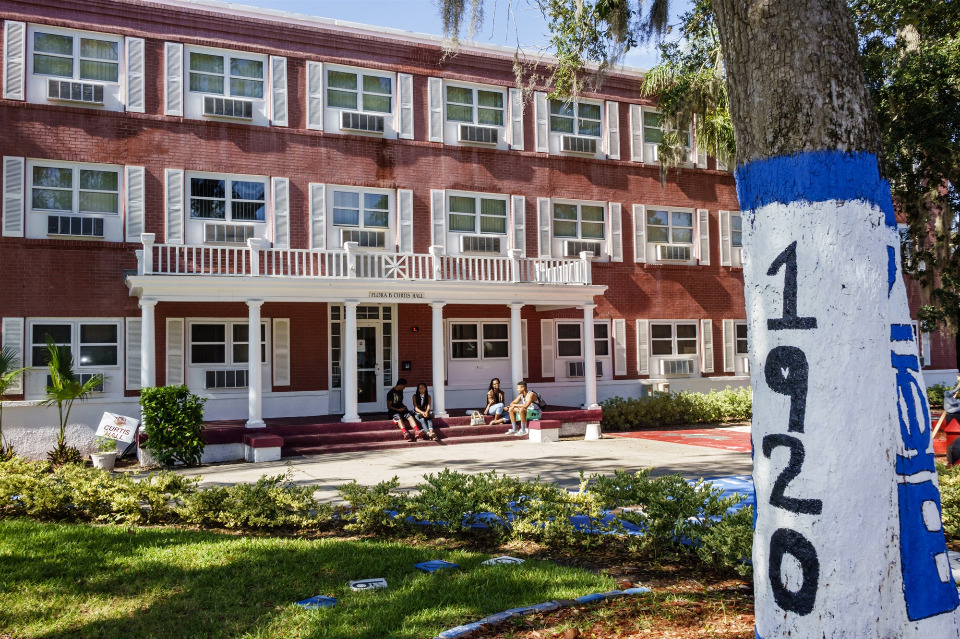
Enrollment declines threaten future of HBCUs, disheartening alumni
The 101 black colleges and universities in the U.S. had their second-lowest student totals in 17 years in the 2018-19 school year.
Darrell Dial entered South Carolina State University in 1987 as a “country boy,” a bit unsure of himself, and graduated with a degree in biology four years later as a man ready to take on the world.
He attributes his development to his experience at the historically black university in Orangeburg, South Carolina — the curriculum but mostly the reassuring, nurturing environment.
“It was a melting pot of high intelligence and backgrounds,” said Dial, 51, a molecular genomics scientist who lives in Atlanta. “This black diversity made a great playground for great debate and banter. It was truly iron sharpening iron for us all. I wouldn’t be the man I am if it weren’t for South Carolina State.”
Dial’s experience and sentiments mirror thousands of graduates of historically black colleges and universities at a time when HBCUs are experiencing an alarming drop in enrollment, to the second-lowest rate last year in 17 years, according to a new report.
According to the National Center for Educational Statistics, more than 6,000 fewer students attended the 101 black colleges and universities in the U.S. during the 2018-19 school year. The 291,767 total was down from the 298,134 in the previous year, and was the lowest total since 2001, when there were 289,985 students at historically black colleges.
HBCUs provided black students an opportunity for a higher education when mainstream colleges were segregated. Cheyney University, founded in 1837 as Cheyney State College, was the first historically black college. Today, it is in financial disrepair and on the verge of collapse, having lost 38 percent of its student body in 2018. Enrollment at Bethune-Cookman College in Daytona Beach, Florida, dropped 20 percent, and its president, Brent Chrite, sent a letter to alumni on Jan. 27 that told of its precarious situation.
“2020 will be a pivotal year in history of B-CU,” Chrite wrote. “It will be the year our beloved university prepared to close its doors, or it will be the year we turned a corner and began moving toward an exciting future.”
The Southern Association of Colleges and Schools Commission on Colleges has required that BC-U wipe out its $8 million operating deficit before submitting its re-accreditation application this month. If accreditation is revoked, B-CU would lose access to most of its more than $7 million in federal funding.
“We cannot survive as a university without it,” Chrite wrote.
Bethune-Cookman’s plight is one of several cases of HBCUs in survival mode.
“There is a distinct possibility that a number of HBCUs could cease to exist in 20 years or so,” said Ronnie Bagley, a retired Army colonel who graduated from Norfolk State University in 1983. “If that were to occur, many low income, first generation students will lose out on an opportunity for a college education.
“That’s scary because HBCUs have been the bedrock of producing some of the most successful and influential contributors in all facets of society, including business, government, military, arts and entertainment. You name it.”
The NCES study does not explain the drop in HBCU enrollment, but there are indications of multiple factors:
- HBCUs lost $50 million when the Department of Education made it more difficult to acquire the PLUS Loan that many schools relied on, according to The Edvocate, which researches educational trends, issues and futures.
- HBCU retention rates—keeping students in school year after year—are lower than predominantly white institutions. A U.S. News study indicates Spelman College leads HBCUs with an 88 percent retention rate, but many other schools drop as low as 50 percent because of financial issues and schools’ inadequate inducements for students to continue their education.
- The explosive appeal of online colleges like DeVry and the University of Phoenix has hit HBCUs hard, according to The Edvocate. HBCUs had been considered a prime place for challenged or “underdog” students, but online options are trending because they are less expensive. Compounding matters, most HBCUs have not implemented thorough online classes or degree programs.
- Investment in some campuses and facilities, like at Norfolk State and North Carolina A&T, has been impressive. But the lack of contemporary technology and building upkeep at many HBCUs — like at Tennessee State, where enrollment has dipped for 10 straight years — has turned away black students.
Added Bagley: “In many cases predominantly white institutions are looking to become more diverse by offering minorities scholarships. While I wanted my children to follow in my footsteps and attend an HBCU, preferably my alma mater, the HBCUs we visited couldn’t offer the kind of money the University of Kentucky did.”
Elaine Brown, a radiologist in San Antonio, turned down a full scholarship to the University of Louisville’s Medical School to attend Meharry Medical College, the HBCU in Nashville renowned for producing black doctors. She had attended historically black Fisk University in Nashville, was crowned Miss Fisk and felt an iron-clad connection to that experience.
“My parents thought I was crazy,” she said. “But it was not just about the education, but the social aspect as well. When I’m with HBCU alums and others who did not attend an HBCU, they don’t understand the effervescence we have when talking about our experiences. … I visited Fisk during my senior year of high school and I never looked back. It was a loving, nurturing, safe space. Sadly, a lot of young people perceive that there is more opportunity and promise at larger institutions.”
All of these factors concern HBCU alums.
“It’s scary because I know how the black college experience elevates you as a person, helps you secure your identity,” said Jacobi Eaves, a 2009 graduate of Morehouse College in Atlanta, which then cost $160,000 over his four years. “A big reason for the downturn has to be about the cost of tuition. It continues to rise, and students leave college in debt. There has to be student loan forgiveness.”
Flecia Brown, a 1988 Spelman College graduate from Detroit, said misconceptions about HBCUs is another other factor in enrollment decline. “It speaks to non-HBCUers’ lack of confidence and understanding of the history, prestige and educational excellence that goes along with attending an HBCU,” Brown, a manager at an executive recruiter firm, said.
“My experience at Spelman was an extension of how I was raised by my parents. It taught me to be unapologetically black, built character and confidence. … When my brother (who did not attend an HBCU) was facing his oldest son’s high school graduation and was in search of a college, there was an absence of HBCUs. And I called him out on it,” she said. “His response was that nobody really talks about or promotes HBCUs in his Los Angeles community. Of course, that was very disappointing.”
Kathy Brown, who graduated as a mechanical engineer from Tennessee State in 1993, said the inherent issues—older facilities, long lines, dormitory maintenance issues—did not taint her HBCU experience. “Those frustrations were offset by a rigorous curriculum and everlasting memories unique to HBCUs,” she said. “But TSU has had 10 years of declining enrollment, and this saddens me.”
Not all schools are struggling, however. North Carolina A&T, for example, has experienced yearly growth in attendance for the last decade. Donations overall to black colleges increased for the ninth straight year, including $479 million for 2018, according to federal data.
So what is the fix? It is a complex answer, but Dial has a theory.
“Presidents have to be more of businessmen and women who understand the university is a business and work hard to align themselves with major corporations,” Dial said. “They need to create partnerships with black and brown countries to offer education to those countries’ young minds in an effort to receive financial backing. This minimizes the need for the handouts from the state and low alumni support, which is another conversation.”
Article via NBC

Netflix and Ava DuVernay Win Dismissal of Defamation Suit
A federal judge ruled in favor of Netflix and director Ava DuVernay on Monday, throwing out a defamation suit over a their miniseries about the Central Park jogger case.
John E. Reid and Associates, a police training firm, filed the suit last fall, alleging that the series had falsely portrayed the “Reid Technique,” its widely used method for conducting interrogations.
In his ruling, Judge Manish S. Shah found that the series’ depiction was protected under the First Amendment.
The four-part Netflix series covered the conviction and ultimate exoneration of five black and Latino teenagers who were accused of assaulting and raping a woman in Central Park in 1989. In the series, a fictionalized prosecutor confronts an NYPD detective with the allegation that he had coerced a confession.
“You squeezed statements out of them after 42 hours of questioning and coercing, without food, bathroom breaks, withholding parental supervision,” the character says. “The Reid Technique has been universally rejected.”
The police training firm alleged that the statement falsely characterized the technique, and incorrectly stated that the technique had been “universally rejected.”
But Shah found that the show employed loose and hyperbolic rhetoric about the technique, protecting it from a defamation claim.
“‘Universally’ is hyperbolic and the prosecutor cannot be taken literally to assert that all intelligent life in the known universe has rejected the technique — which means his statement is an imprecise, overwrought exclamation,” Shah wrote. “The statement was also made by a fictionalized character, during a fictionalized conversation… And while labeling something ‘fictitious’ will not insulate it from a defamation action… placing non-verifiable hyperbole in the mouth of a fictionalized character with an ax to grind provides a few layers of protection from civil damages for defamation.”
Last week, former prosecutor Linda Fairstein filed her own defamation lawsuit against Netflix and DuVernay over the series, claiming that she was falsely portrayed as the racist mastermind behind the prosecution of the Central Park Five.
Netflix said it would vigorously defend that lawsuit.
Article via MSN
Let’s talk about Central Park Five -“when they see us” by Ava Duvernay

Washingtion GOV. Jay Inslee Updates On Coronavirus Rresponse
To all Washingtion State TiSippers!
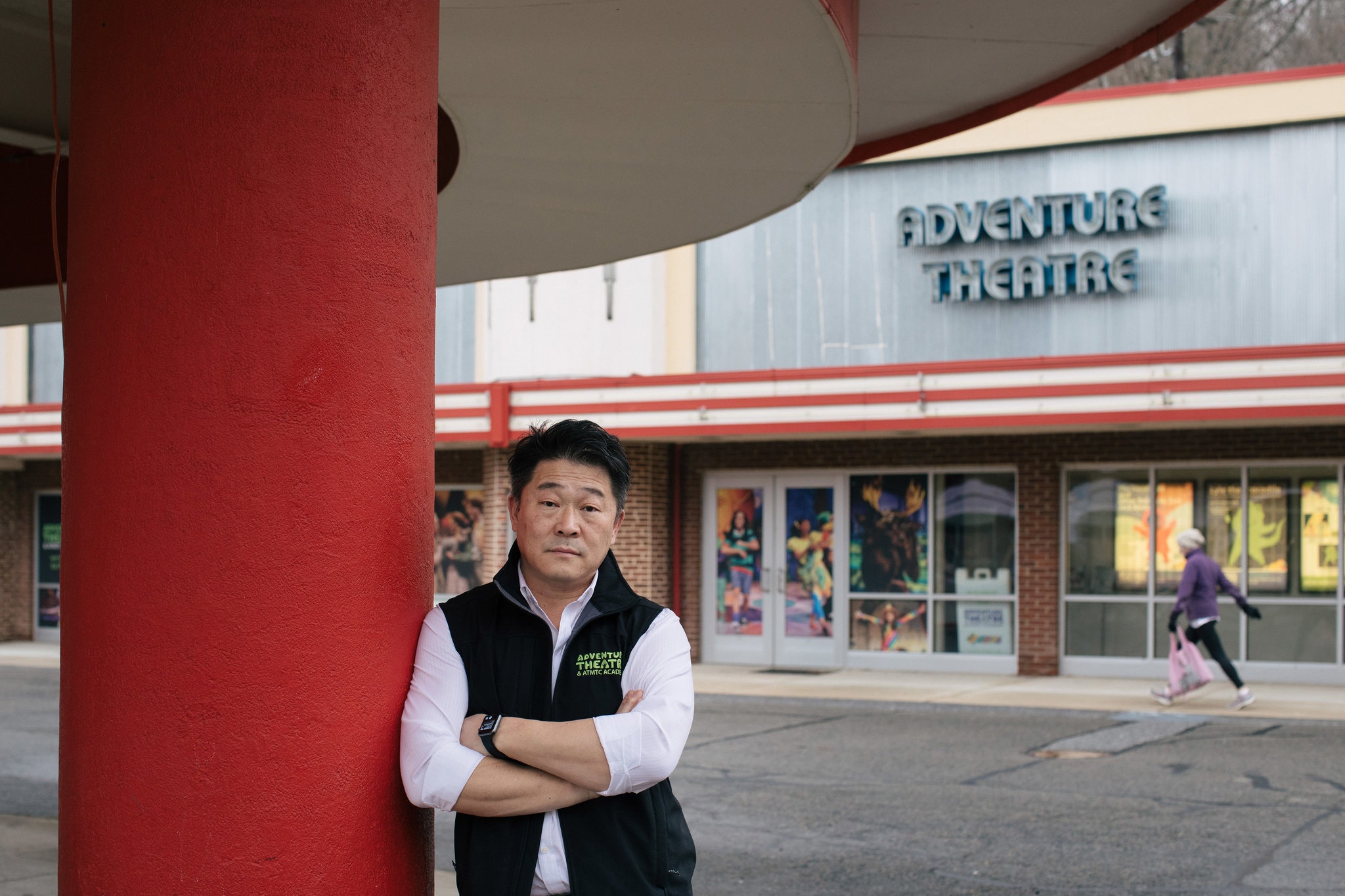
Spit On, Yelled At, Attacked: Chinese-Americans Fear for Their Safety
WASHINGTON — Yuanyuan Zhu was walking to her gym in San Francisco on March 9, thinking the workout could be her last for a while, when she noticed that a man was shouting at her. He was yelling an expletive about China. Then a bus passed, she recalled, and he screamed after it, “Run them over.”
She tried to keep her distance, but when the light changed, she was stuck waiting with him at the crosswalk. She could feel him staring at her. And then, suddenly, she felt it: his saliva hitting her face and her favorite sweater.
In shock, Ms. Zhu, who is 26 and moved to the United States from China five years ago, hurried the rest of the way to the gym. She found a corner where no one could see her, and she cried quietly.
“That person didn’t look strange or angry or anything, you know?” she said of her tormentor. “He just looked like a normal person.
As the coronavirus upends American life, Chinese-Americans face a double threat. Not only are they grappling like everyone else with how to avoid the virus itself, they are also contending with growing racism in the form of verbal and physical attacks. Other Asian-Americans — with families from Korea, Vietnam, the Philippines, Myanmar and other places — are facing threats, too, lumped together with Chinese-Americans by a bigotry that does not know the difference.
In interviews over the past week, nearly two dozen Asian-Americans across the country said they were afraid — to go grocery shopping, to travel alone on subways or buses, to let their children go outside. Many described being yelled at in public — a sudden spasm of hate that is reminiscent of the kind faced by American Muslims and other Arabs and South Asians after the terrorist attacks of Sept. 11, 2001.
But unlike in 2001, when President George W. Bush urged tolerance of American Muslims, this time President Trump is using language that Asian-Americans say is inciting racist attacks.
Mr. Trump and his Republican allies are intent on calling the coronavirus “the Chinese virus,” rejecting the World Health Organization’s guidance against using geographic locations when naming illnesses, since past names have provoked a backlash.
Mr. Trump told reporters on Tuesday that he was calling the virus “Chinese” to combat a disinformation campaign by Beijing officials saying the American military was the source of the outbreak. He dismissed concerns that his language would lead to any harm.
On Monday evening, Mr. Trump tweeted, “It is very important that we totally protect our Asian American community in the United States.” He added they should not be blamed for the pandemic, though he did not comment on his use of the phrase “Chinese virus.”
It is very important that we totally protect our Asian American community in the United States, and all around the world. They are amazing people, and the spreading of the Virus….
….is NOT their fault in any way, shape, or form. They are working closely with us to get rid of it. WE WILL PREVAIL TOGETHER
“If they keep using these terms, the kids are going to pick it up,” said Tony Du, an epidemiologist in Howard County, Md., who fears for his son, Larry. “They are going to call my 8-year-old son a Chinese virus. It’s serious.”
Mr. Du said he posted on Facebook that “this is the darkest day in my 20-plus years of life in the United States,” referring to Mr. Trump’s doubling down on use of the term.
While no firm numbers exist yet, Asian-American advocacy groups and researchers say there has been a surge of verbal and physical assaults reported in newspapers and to tip lines.
San Francisco State University found a 50 percent rise in the number of news articles related to the coronavirus and anti-Asian discrimination between Feb. 9 and March 7. The lead researcher, Russell Jeung, a professor of Asian-American studies, said the figures represented “just the tip of the iceberg” because only the most egregious cases would be likely to be reported by the media.
Professor Jeung has helped set up a website in six Asian languages to gather firsthand accounts; some 150 cases have been reported on the site since it was started last Thursday.
Benny Luo, founder and chief executive of NextShark, a website focused on Asian-American news, said the site used to get a few tips a day. Now it is dozens.
“We’ve never received this many news tips about racism against Asians,” he said. “It’s crazy. My staff is pulling double duty just to keep up.” He said he was hiring two more people to help.
No one is immune to being targeted. Dr. Edward Chew, the head of the emergency department at a large Manhattan hospital, is on the front lines of fighting the coronavirus. He said that over the past few weeks, he had noticed people trying to cover their nose and mouth with their shirts when they are near him.
Dr. Chew has been using his free time to buy protective gear, like goggles and face shields, for his staff in case his hospital runs out. On Wednesday night at a Home Depot, with his cart filled with face shields, masks and Tyvek suits, he said he was harassed by three men in their 20s, who then followed him into the parking lot.
“I heard of other Asians being assaulted over this, but when you are actually ridiculed yourself, you really feel it,” he said the following day.
A writer for The New Yorker, Jiayang Fan, said she was taking out her trash last week when a man walking by began cursing at her for being Chinese.
“I’ve never felt like this in my 27 yrs in this country,” she wrote on Twitter on Tuesday. “I’ve never felt afraid to leave my home to take out the trash bc of my face.”
Attacks have also gotten physical.
In the San Fernando Valley in California, a 16-year old Asian-American boy was attacked in school by bullies who accused him of having the coronavirus. He was sent to the emergency room to see whether he had a concussion.
In New York City a woman wearing a mask was kicked and punched in a Manhattan subway station, and a man in Queens was followed to a bus stop, shouted at and then hit over the head in front of his 10-year-old son.
People have rushed to protect themselves. One man started a buddy-system Facebook group for Asians in New York who are afraid to take the subway by themselves. Gun shop owners in the Washington, D.C., area said they were seeing a surge of first-time Chinese-American buyers.
At Engage Armament in Rockville, Md., most gun buyers in the first two weeks of March have been Chinese-American or Chinese, according to the owner, Andy Raymond.
More than a fifth of Rockville’s residents are of Asian ethnicity, and Mr. Raymond said buyers from Korean and Vietnamese backgrounds were not unusual. But Mr. Raymond said he was stunned by the flow of Chinese customers — in particular green-card holders from mainland China — that began earlier this month, a group that rarely patronized his shop before.
“It was just nonstop, something I’ve never seen,” he said.
Mr. Raymond said that few of the Asian customers wanted to talk about why they were there, but when one of his employees asked a woman about it, she teared up. “To protect my daughter,” she replied.
For recent immigrants like Mr. Du who are in close touch with friends and family in China, the virus has been a screaming danger for weeks that most Americans seemed oblivious to.
Mr. Du is trying to remain hopeful. He spends his weekends training to become a volunteer with Maryland’s emergency medical workers. He is part of a group of Chinese-American scientists who organized a GoFundMe account to raise money for protective gear for hospital workers in the area. In three days, they raised more than $55,000, nearly all in small donations.
But he said he was afraid of the chaos that could be unleashed if the United States death toll rises significantly.
Already a gun owner, Mr. Du, 48, said he was in the process of buying an AR-15-style rifle.
“Katrina is not far away,” he said, alluding to the unrest in New Orleans following Hurricane Katrina in 2005. “And when all these bad things come, I am a minority. People can see my face is Chinese, clearly. My son, when he goes out, they will know his parents are Chinese.”
For American-born Asians, there is a sudden sense of being watched that is as unsettling as it is unfamiliar.
“It’s a look of disdain,” said Chil Kong, a Korean-American theater director in Maryland. “It’s just: ‘How dare you exist in my world? You are a reminder of this disease, and you don’t belong in my world.’”
He added: “It’s especially hard when you grow up here and expect this world to be yours equally. But we do not live in that world anymore. That world does not exist.”
One debate among Asian-Americans has been over whether to wear a mask in public. Wearing one risks drawing unwanted attention; but not wearing one does, too. Ms. Zhu said her parents, who live in China, offered to ship her some.
“I’m like, ‘Oh please, don’t,’” she said. She said she was afraid of getting physically attacked if she wore one. “Lots of my friends, their social media posts are all about this: We don’t wear masks. It’s kind of more dangerous than the virus.”
A 30-year-old videographer in Syracuse, N.Y., said he was still shaken from a trip to the grocery store last week, when the man ahead of him in the checkout line shouted at him, “It’s you people who brought the disease,” and other customers just stared at him, without offering to help. That same day, he said, two couples verbally abused him at Costco.
“I feel like I’m being invaded by this hatred,” said the man, Edward, who asked that his last name not be used because he feared attracting more attention. “It’s everywhere. It’s silent. It’s as deadly as this disease.”
He said he had tried to hide the details of what happened from his mother, who moved to the United States from China in the 1970s. But there was one thing he did tell her.
“I told her, whatever you do, you can’t go shopping,” he said. “She needed to know there’s a problem and we can’t act like it’s normal anymore.”
via: https://www.nytimes.com/2020/03/23/us/chinese-coronavirus-racist-attacks.html?searchResultPosition=1
Photo Credit: Alyssa Schukar for The New York Times
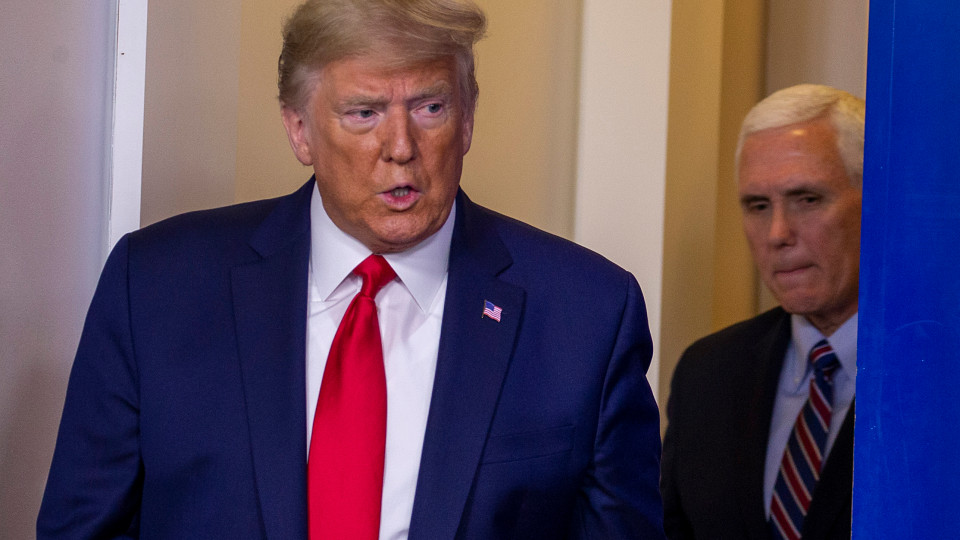
Arizona man dies after taking anti-malarial medicine touted by Trump to treat COVID-19
An Arizona man has died and his wife is in critical condition after the couple took a medicine touted by President Donald Trump as treatment for COVID-19.
Banner Health says the couple in their 60s took chloroquine, a malaria medication, and got sick within 30 minutes.
It’s unclear if the couple ingested the medication specifically because of COVID-19, the disease caused by the coronavirus.
The medicine is usually obtained by prescription, and Banner Health is urging medical providers against prescribing it to people who aren’t hospitalized.
Last week, Trump falsely stated the Food and Drug Administration had just approved the use of chloroquine to treat patients infected with coronavirus. Even after the FDA chief clarified that the drug still needs to be tested, Trump overstaed the drug’s potential upside in containing the virus.
Dr. Daniel Brooks, medical director of Banner Poison and Drug Information Center, says the last thing health officials want is for emergency rooms to be swamped by patients who believe they found a vague and risky solution that could potentially jeopardize their health.
Photo Credit: ktla.com
Arizona man steals dozens of unused coronavirus testing kits
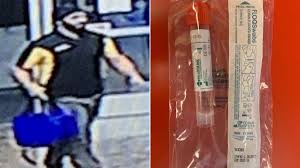
TUCSON, AZ (3TV/CBS 5) – The Tucson Police Department is looking for a man who stole dozens of unused coronavirus testing kits from a health clinic.
According to investigators, the man pretended to be a delivery driver and went inside the El Rio Health Center just before 8 p.m. on Friday. He swiped 29 testing kits while the employees were getting ready to close. He drove off in a reddish-colored Dodge Charger or something similar. On Saturday morning, the workers noticed the kits were gone and called 911.
The suspect is described as a Hispanic man in his 30s, roughly 5’9″ to 5’11” with a large build and has a full, dark-colored beard with some graying.
Anyone with information is asked to call 88-CRIME. (520-882-7463)
Police said the stolen kits are basically useless to the thief since the kits can only be tested in a private lab that has the proper tools. Officers also said the stolen kits have been replaced already so it hasn’t affected the clinic’s testing abilities. But it has taken 29 testing kits out of the medical field.
The department also warns that anyone selling coronavirus testing kits is a scammer since there are no home test kits for the virus.
Photo Credit: cnn.com