


Trump draws boos when introduced to crowd at World Series
WASHINGTON — President Donald Trump’s low-profile appearance Sunday night at Game 5 of the World Series came at a high-profile moment of his presidency. Yet he still drew loud boos and jeers when introduced to the crowd.
Wearing a dark suit and a tie, Trump arrived at Nationals Park just before the first pitch of the Houston Astros-Washington Nationals matchup. Hours earlier, he had announced that U.S. forces had assaulted the hiding place of Islamic State leader Abu Bakr al-Baghdadi, who was killed in the raid in northeast Syria.
A military success against a most-wanted enemy of the U.S. and its allies could have provided the president a rare moment of bipartisan comity, especially amid a divisive impeachment inquiry.
Trump and first lady Melania Trump entered a lower-tier box to the left of home plate as the game got underweay. At that point his presence wasn’t formally announced, but baseball fans in the section just below Trump’s suite turned to look toward the box as he arrived. Some waved at the president as he smiled and gave a thumbs-up.
At the end of the third inning, ballpark video screens carried a salute to U.S. service members that drew cheers throughout the stadium. When the video cut to Trump and his entourage and the loudspeakers announced the Trumps, cheers abruptly turned into a torrent of boos and heckling. Chants of “Lock him up!” broke out in some sections.
Trump appeared unfazed and continued waving. Later, some fans behind home plate held a sign reading “VETERANS FOR IMPEACHMENT”.
Until Sunday night, Trump had yet to attend a major league game as president even though the White House is a few miles northwest of Nationals Park. A dozen or so congressional lawmakers accompanied the president, according to a list provided by the White House, including Sens. Lindsey Graham of South Carolina and David Perdue Georgia.
“I think everybody is excited,” Nationals star pitcher Stephen Strasburg said before the game. “It’s the president of the United States. So there’s obviously beefed-up security. So usually the dogs that are sniffing in our clubhouse are these nice Labs that are super friendly. And today there was a German shepherd that I didn’t really feel comfortable petting.”
Nationals manager Dave Martinez said: “He’s coming to the game. He’s a fan. Hopefully he cheers for the Washington Nationals, and I hope he enjoys the game.”
Trump’s staff has long tried to shield him from events where he might be loudly booed or heckled, and he has rarely ventured into the neighborhoods of the heavily Democratic city. He won just over 4% of the vote in the District of Columbia in 2016.
Major League Baseball Commissioner Rob Manfred said he discussed with Trump whether he’d like to throw out the ceremonial first pitch, but the president declined while citing the disruption that would cause fans getting to the ballpark.
Washington Nationals principal owner Mark Lerner told the Washington Post that Trump should be at the game, but he made clear that he did not invite Trump to throw out the first pitch, saying there were many other candidates that should be considered before Trump.
Jose Andrés, a prominent local restaurant owner and humanitarian, threw out the first pitch to a roaring, sustained ovation. He has a history with Trump, too, both in business and in politics.
Andrés has repeatedly opposed Trump’s immigration policies and his administration’s response to Hurricane Maria in Puerto Rico. Four years ago, he withdrew from plans to open a restaurant in the Trump International Hotel in Washington following Trump’s controversial comments about Mexican immigrants during the presidential campaign. Legal action ensued and the dispute was settled in 2017.
via: https://pix11.com/2019/10/27/trump-draws-boos-when-introduced-to-crowd-at-world-series/
Photo Credit: pix11.com

Man wins $200,000 lottery prize on the way to his last chemo treatment
PINK HILL, N.C. — A man on his way to his last chemotherapy treatment won a $200,000 lottery prize, according to the North Carolina Education Lottery.
Ronnie Foster from Pink Hill, North Carolina, said he first purchased a $1 ticket and won a measly $5. Last minute, he decided to trade in the $5 for two more tickets.
When he scratched the first one, he won nothing. But then he scratched the second ticket.
“I saw all those zeroes and I froze,” Foster told the lottery. “I didn’t believe it until I gave it to the clerk at the counter to scan. When it showed, ‘Go to lottery headquarters,’ I started shaking. I couldn’t believe it.”
Foster, a retired Department of Transportation worker, is battling colon cancer and nearing the end of his treatment. The lottery win made a good day an even better one.
“I was already happy because it was my last round of chemo,” said Foster. “Winning this made it my lucky day.”
While Foster said he had medical insurance, a part of the the lottery win will go towards paying off some of the treatment costs that weren’t covered by his policy. The rest will be saved “for the future.”
After taxes, Foster took home $141,501. The lucky winner claimed his prized on Friday.
According to the lottery, sales raise over $700 million a year, which goes toward supporting education programs across the state.
via: https://pix11.com/2019/10/28/man-wins-200000-lottery-prize-on-the-way-to-his-last-chemo-treatment-2/
Photo Credit: pix11.com

Georgia driver survives after logs pierce windshield of SUV
Meredith) — A Georgia driver survived after multiple logs from a logging truck pierced the windshield of his SUV, according to authorities.
Dramatic photos of the crash show the logs stretch all the way to the SUV’s rear hatch.
The crash happened earlier this month on Oct. 11 in Cohutta, WTVC-TV reported.
Fortunately, the driver suffered only minor injuries, according to the Whitfield County Fire Department. Transforming financial enterprises with innovation.Explore new business models based on integrated partner ecosystems that infuse financial services throughout customers’ daily lives.Ad By IBMSee More
The department posted several photos of the crash to Facebook, and many people were amazed the person behind the wheel survived.
“All I can think about is Final Destination!! This person was truly blessed to escape with only minor injuries,” one person wrote.
It’s unclear what led to the crash and who was at fault. Fire officials also did not mention whether anyone will be charged.
Photo Credit: Whittfield County Fire Department

Woman dies after explosion at gender reveal party
KNOXVILLE, Iowa — An Iowa woman has died after an explosion at a gender reveal party created debris that hit her.
The Marion County Sheriff’s office says the explosion happened at a home in central Iowa around 4 p.m. Saturday during a party to announce the gender of a baby a couple is expecting.
Deputies arrived at the home in Knoxville to find a 56-year-old woman dead. Knoxville is about 40 miles (64.37 kilometers) southeast of Des Moines.
Investigators determined that an explosion during the gender reveal announcement caused the woman’s death.
No other details about the explosion were available. The victim’s name wasn’t immediately released.
via: https://pix11.com/2019/10/27/woman-dies-after-explosion-at-gender-reveal-party/
Photo Credit: Getty Images
Dallas police officer shoots his son after mistaking him for an intruder
A Texas police officer shot his adult son Saturday, thinking he was an intruder.
Dispatchers received a call around 6 p.m. CDT from a man reporting a shooting at his home. The man said he was an off-duty Dallas officer who mistook his son for an intruder and accidentally shot him, according to a release from the DeSoto Police Department. DeSoto is a city south of Dallas.
When officers arrived on scene, they found the victim bleeding from his right forearm. The victim was taken to a hospital with non-life-threatening injuries, the release said.
“It was a startling situation, it was an accident,” Pete Schulte, DeSoto police spokesman, told CNN affiliate KTVT-TV. “And fortunately, we’re very happy that it did not result in serious bodily injury or death.”
No charges have been filed and no arrests were made, Schulte said.
“The DeSoto Police Department has treated this like every other case that we would have had and we would’ve handled it the exact same way that if any charges are appropriate later on, they’ll be forwarded over to the DA’s office for them to make a decision,” Schulte said.
The identities of the officer and his son are not being released until details are confirmed, the release said.
Photo Credit: Getty Images
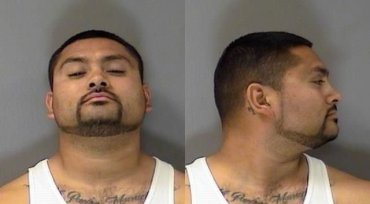
Man who said he saw Yogi Bear in Yellowstone gets 15 years for 8 pounds of meth in spare tire
Billings (Billings Gazette) — A California man was sentenced to prison Thursday after a trooper found more than 8 pounds of methamphetamine hidden in a spare tire of the car he was driving near Columbus.
Manuel Paz Sanchez Jr., 32, of Sacramento, California, was sentenced to 15 years and eight months in prison in U.S. District Court in Billings. Judge Susan Watters also ordered Sanchez to serve five years of supervised release afterward.
Sanchez pleaded guilty in May to a single count of possession with intent to distribute methamphetamine.
A Montana Highway Patrol trooper pulled over Sanchez on Interstate 90 near Columbus in December 2017 because Sanchez was following too closely to the car in front, according to an affidavit by a Drug Enforcement Administration agent.
Sanchez told the trooper he was driving to North Dakota from Idaho, where he’d been visiting family, and planned to fly back to California from North Dakota, according to a press release from U.S. Attorney for Montana Kurt Alme.
But Sanchez could not recall the name of the Idaho town he had visited, according to the complaint, and paperwork for the rental car he was driving indicated it was to be returned the previous day to the Enterprise Rent-A-Car back in California.
Sanchez also told a Drug Enforcement Administration agent who questioned him at the traffic stop that he had just come from a visit to Yellowstone National Park, where he saw Yogi Bear, the complaint states.
The trooper requested permission to search the car, and Sanchez granted it, according to the complaint.
Inside a spare tire in the trunk were vacuum-sealed packages containing approximately 8.3 pounds, or roughly 30,000 doses, of meth, Alme’s office said.
Photo Credit: Billings Gazette

No one believed him when he said he hadn’t been drinking. Then researchers found his body was producing alcohol
NORTH CAROLINA — When a man in North Carolina was pulled over on suspicion of driving drunk, police didn’t believe him when he said he hadn’t had any alcohol.
The man, in his late 40’s at the time, refused to take a breathalyzer test and was taken to a hospital, where his initial blood alcohol level was found to be 0.2% — about 2.5 times the legal limit and the equivalent of consuming 10 drinks an hour. Despite the man swearing up and down that he hadn’t had anything to drink, doctors didn’t believe him either.
But researchersat the Richmond University Medical Center in New York eventually discovered that the man was telling the truth. He wasn’t downing beers or cocktails — instead, there was yeast in his gut that was likely converting carbohydrates in the food he ate to alcohol.
In other words, his body was brewing beer.
The findings were reported in a study in BMJ Open Gastroenterology. The man, whose identity has not been revealed, had a rarely diagnosed medical condition called auto-brewery syndrome (ABS), also known as gut fermentation syndrome.
Gut fermentation syndrome occurs when yeast in the gastrointestinal tract causes the body to convert carbohydrates ingested through food into alcohol. The process typically takes place in the upper GI tract, which includes the stomach and the first part of the small intestine.
“These patients have the exact same implications of alcoholism: the smell, the breath, drowsiness, gait changes,” Fahad Malik, the study’s lead author and the chief internal medicine resident at the University of Alabama at Birmingham, told CNN. “They will present as someone who’s intoxicated by alcohol, but the only difference here is that these patients can be treated by antifungal medications.”
Researchers treated him with antifungal medications
Things weren’t the same for the man after he completed a course of antibiotics to treat a thumb injury. His personality started to change, researchers wrote in the study, and he experienced episodes of depression, ‘brain fog,’ memory loss and aggressive behavior that was out of character for him.
Three years later, after his suspected drunk driving arrest, the man’s aunt bought a breathalyzer to record his alcohol levels. She had heard about a similar case that had been successfully treated by a doctor in Ohio and convinced her nephew to seek treatment there too.
His basic lab tests turned out normal. But doctors found two strains of yeast in his stool: Saccharomyces cerevisiae, a yeast commonly used in beer brewing, winemaking and baking, as well as another fungus.
The man was successfully treated at the Ohio clinic and told to stick to a strict carbohydrate-free diet along with some special supplements. But after a few weeks, his symptoms started to flare up again. This time, no treatment seemed to work despite visits to numerous medical professionals.
At one point, the man became so inebriated that he fell and experienced bleeding in his brain. He was taken to a neurosurgical center where he spontaneously recovered in 10 days, researchers said.
“In this institution, his blood alcohol levels ranged from 50 to 400 mg/dL,” the researchers wrote. “Here too, the medical staff refused to believe that he did not drink alcohol despite his persistent denials.”
Finally, the man sought help from an online support group and got in touch with the researchers at the Richmond University Medical Center, who said in the study that they believed the antibiotics he took years ago altered his gut microbiome and allowed fungi to grow in his gastrointestinal tract.
The researchers then used antifungal therapies and probiotics to help normalize the bacteria in his gut, a treatment that he has continued. And aside from one relapse that occurred after he binged on pizza and soda without telling the researchers, it seems to be working.
And he can eat pizza again.
“Approximately 1.5 years later, he remains asymptomatic and has resumed his previous lifestyle, including eating a normal diet while still checking his breath alcohol levels sporadically,” the authors wrote in the study.
The condition is rarely diagnosed
There have only been a few studies documenting cases of gut fermentation syndrome and the condition is rarely diagnosed, Malik said. In the past, it’s even been regarded as a myth.
Gut fermentation syndrome was described in1912 as “germ carbohydrate fermentation,” and was studied in the 1930s and 1940s as a contributing factor to vitamin deficiencies and irritable bowel syndrome. A group of 20 to 30 cases popped up in Japan in the 1970s and the first US cases were reported about 10 years later.
There have been a handful of reported cases in recent years. A 2013 study described a case of a 61-year-old man who for years seemed to be drunk all the time before he was diagnosed with gut fermentation syndrome. In 2015, a woman in upstate New York had a DUI dismissed after presenting evidence that she had the condition.
The authors of the Richmond University Medical Center study recommend that doctors investigate for the condition especially when a patient shows elevated blood alcohol levels despite denying that they consumed alcohol.
Early signs of gut fermentation syndrome can include mood changes, delirium and brain fog, the researchers wrote, even before a patient starts exhibiting symptoms of alcohol inebriation.
The study says more research should be done on the use of probiotics as a treatment for the condition.
“This is a condition that is treatable with dietary modifications, appropriate antifungal therapy, and possibly probiotics,” the researchers wrote. “The use of probiotics and faecal microbiota transplantation could be considered for future studies.”
Photo Credit: pix11.com
Texas A&M Commerce Mass Shooting
A reported shooting took place at a Homecoming party for Texas A&M University at Commerce on Saturday night. A graphic video of the aftermath was captured on Snapchat and posted on Twitter. In the video, there appears to be numerous victims at The Party Venue located in Greenville, Texas.
According to WFAA-TV reporter Jason Whitely, there are “At least two fatalities. More than a dozen injured. A .227 caliber rifle is believed to be used. Motive unknown,” he wrote. Commerce, Texas is located about an hour from Dallas.”
On the Hunt County scanner, authorities referred to “multiple people shot” and “multiple victims.” They said the shooting occurred at 2275 US highway 380, which is the address of the Party Venue. One person was shot in the neck, scanner traffic stated. You can listen to the audio later in this story. At one point on the scanner early on, an officer referred to seven victims.
The video posted online was incredibly graphic, and showed numerous bodies laying on the floor covered in blood. People can be heard in the background screaming, as people attend those injured and bleeding. It’s a scene of mass chaos and confusion while people help to attend the victims who were shot. Heavy has reviewed, but is choosing not to run, the video because of its graphic nature.
The exact amount of casualties is still unknown, but there are unconfirmed reports of possibly 20 people injured. We called into the Sheriff’s Office in Hunt County, but they could not release any comments on the situation or say when they would be updating the public.
There have not been any reports detailing the suspect other than whereabouts of the shooter is currently unknown.
A heartbreaking video posted by Trell LowWay on Facebook, a distraught man said that his brother had been lying there for 30 minutes. My brother “got killed,: he said. Another man told him they’re working on finding out who did “all this.” The man continued angrily discussing what happened. “My brother’s in that building, still laying down.”
Texas A&M at Commerce University was in the midst of celebrating their annual Homecoming celebration, which kicked off on Monday, October 21, and concluded on Saturday, October 26, with the Lion Football game against Western New Mexico. In the evening, a Halloween party entitled “Twerk or Treat,” a costume party located at 2275 Highway 380 in Greenville.
via: https://heavy.com/news/2019/10/texas-am-mass-commerce-mass-shooting/
Photo Credit: Getty Images

Researchers Find Racial Bias in Hospital Algorithm
Healthier white patients were ranked the same as sicker black patients, according to study published in the journal Science
Black patients were less likely than white patients to get extra medical help, despite being sicker, when an algorithm used by a large hospital chose who got the additional attention, according to a new study underscoring the risks as technology gains a foothold in medicine.
Hospitals use the algorithm—from Optum, UnitedHealth Group Inc. ’s health-services arm—to find patients with diabetes, heart disease and other chronic ailments who could benefit from having health-care workers monitor their overall health, manage their prescriptions and juggle doctor visits, according to the study published Thursday in the journal Science.
Yet the algorithm gave healthier white patients the same ranking as black patients who had one more chronic illness as well as poorer laboratory results and vital signs.
The reason? The algorithm used cost to rank patients, and researchers found health-care spending for black patients was less than for white patients with similar medical conditions.
“What the algorithm is doing is letting healthier white patients cut in line ahead of sicker black patients,” said Dr. Ziad Obermeyer, the study’s lead author and an acting associate professor of health policy at the University of California, Berkeley.
Optum advises its customers that its predictive algorithms shouldn’t replace physician judgment, a company spokesman said. Efforts to use analytics in health care have only scratched the surface of their potential and should be continually reviewed and refined, he said.
Optum’s algorithm is used by more than 50 organizations, according the company’s website. Partners Healthcare in Boston is among those to have used it, according to published research. A Partners spokesman said the hospital system is vigilant about how well its algorithms perform. He added a Partners researcher co-authored the paper, which “is an important step in rooting out some of the flaws that exist.”
The Washington Post and Science News earlier reported Optum is the algorithm’s developer.
Algorithms, developed by computers crunching vast data sets, are increasingly shaping choices in medicine, from interpreting medical scans to predicting who might become addicted to opioids, suffer a dangerous fall or end up in the hospital.
The technology can speed up and improve some decisions, leading to better treatment for patients, supporters say. But doctors who get suggestions to tweak their patients’ care based on the findings of algorithms often don’t know the details of the technology that led to the recommendation.
Poorly designed algorithms risk reinforcing racial and gender biases, technology experts caution, as studies of algorithms in nonmedical settings like credit scoring, hiring and policing have found.
Algorithms “can give the gloss of being very data-driven, when in fact there are a lot of subjective decisions that go into setting up the problem in the first place,” said Solon Barocas, an assistant professor at Cornell University who is also a principal researcher at Microsoft Research.
Researchers behind the study said well-designed algorithms could help reduce bias that leads to wide disparities in health-care outcomes and access to care. They created an alternative algorithm that increased the percentage of those identified for extra help who were black to about 47%, up from 18%.
“It’s a tool that can do a great deal of good and a great deal of bad, it merely depends on how we use the tool,” said Sendhil Mullainathan, a University of Chicago computational science professor who was an author of the study.
Hospitals and health insurers across the U.S. use the Optum algorithm to spot patients who could benefit from extra help from nurses, pharmacists and case workers, the authors of the study said.
To identify those with the biggest medical needs, the algorithm looks at patients’ medical histories and how much was spent treating them, and then predicts who is likely to have the highest costs in the future.
For the study, data-science researchers looked at the assessments made by one hospital’s use of the algorithm. The study didn’t name the hospital. The researchers focused on the algorithm’s rankings of 6,079 patients who identified themselves as black in the hospital’s records, and 43,539 who identified as white and didn’t identify themselves as any other race or ethnicity.
Then the researchers assessed the health needs of the same set of patients using their medical records, laboratory results and vital signs, and developed a different algorithm.
Using that data, the researchers found that black patients were sicker than white patients who had a similar predicted cost. Among those rated the highest priority by the hospital’s algorithm, black patients had 4.8 chronic diseases compared with 3.8 of the conditions among white patients.
The researchers found the number of black patients eligible for fast-track enrollment in the program more than doubled by prioritizing patients based on their number of chronic conditions, rather than ranking them based on cost.
The findings show “how a seemingly benign choice of label (that is, health cost) initiates a process with potentially life-threatening results,” Ruha Benjamin, author of “Race After Technology” and an associate African-American studies professor at Princeton University, said in an accompanying commentary in Science.
Algorithms are playing an increasing role in medicine, though largely invisible to patients.
Doctors are using algorithms to read scans for lung cancer, for instance. Hospitals are deploying the technology to spot which critically ill patients are likely to worsen dramatically. Meantime, health insurers are using algorithms for reasons including to detect patients who are at risk of opioid addiction or who appear headed toward costly lower-back surgery.
Alan Muney, a former executive at health insurer Cigna Corp., said it is common for insurers to use the projected cost of care as a focus in selecting who might get extra outreach or support.
“It’s troubling there was such a big difference” in the effects for black and white patients based on an algorithm focused on cost, he said.
Insurers are developing algorithms that include variables beyond medical costs, including issues that might signal barriers to accessing care, such as financial stress and food insecurity, he said.
Article via Wall Street Journal

“Harriet” Star Cynthia Erivo Responds to Backlash Over Her Casting | Oprah At Home
Many felt Erivo was not an appropriate actress for this film due to her being Nigerian and what is considered lackluster acting skills. What do you think? Did Erivo do Harriet Tubman justice in this film?