


Queen Mary BioEnterprises Innovation Centre is looking for 24 volunteers to inject with coronavirus and participate in their flu camp
They will be paid about $4,588 for their troubles.
This isn’t the latest twisted Stephen King novel. Rather, it’s an attempt by medical research and development company Hvivo to create a vaccine for the deadly disease which has killed more than 3,800 across the globe.
The human guinea pigs — who will receive a battery of tests before being selected — will be given two of the virus’ weaker strains, 0C43 and 229E, which should cause mild respiratory symptoms. They will then be given new or existing vaccines.
Doctors — who will wear protective clothing and ventilators — will analyze the patients’ responses to the vaccine, and the results will help researchers focus on the most effective treatments in order to fast-track them.
Aside from the actual downside of being sick, participants must stay in quarantine for two weeks, eat a restricted diet and avoid human contact and exercise.
The East London-based company is just one of 20 firms joining the global race to find a vaccine that could be ready by next winter, reports the Times of London.
“Drugs companies can get a very good idea within a few months of starting a vaccine study whether it’s working or not, using such a small sample of people,” said Andrew Catchpole, Hvivo’s chief scientist.
The testing will begin once Hvivo gets the go-ahead from UK’s Medicines and Healthcare products Regulatory Agency.
Photo Credit: nypost.com

Family accidentally orders 12 years’ worth of toilet paper
AUSTRALIA – There’s nothing worse than not having enough toilet paper when you need some, so it’s always a good idea to have some extra rolls stored up.
This might be overkill, however.
A family in Australia is sitting on a mountain of toilet paper after making a mistake while ordering online. Fortunately for them, this error may have occurred at a very fortunate time.
Haidee Janetzki meant to order 48 rolls of toilet paper, but instead ordered 48 boxes, Reuters reports. Now, she and her family are the proud owners of 2,304 rolls of toilet paper, which they have stacked up in their garage.
Australia is currently facing a shortage of the bathroom necessity, ABC reports. This is likely due to Australians stockpiling everyday items after hearing about reports of the coronavirus outbreak. This has forced some factories to ramp up production to a 24-hour-a-day schedule.
“I’m relieved my friends and family don’t have to worry about it,” Haidee Janetzki told Reuters.
Chris Janetzki shared a video of his family’s unexpected toilet paper haul on Facebook, where he showed Haidee sitting on a throne made out of the large boxes of toilet paper.
According to the family, they don’t plan on using all of the toilet paper themselves (which they say would take them about 12 years to do). Instead, the family says they plan on selling the extra boxes in a fundraiser for the same price they paid.
It’s always better to have too much toilet paper.
via: https://www.fox35orlando.com/news/family-accidentally-orders-12-years-worth-of-toilet-paper
Photo Credit: fox35orlando.com
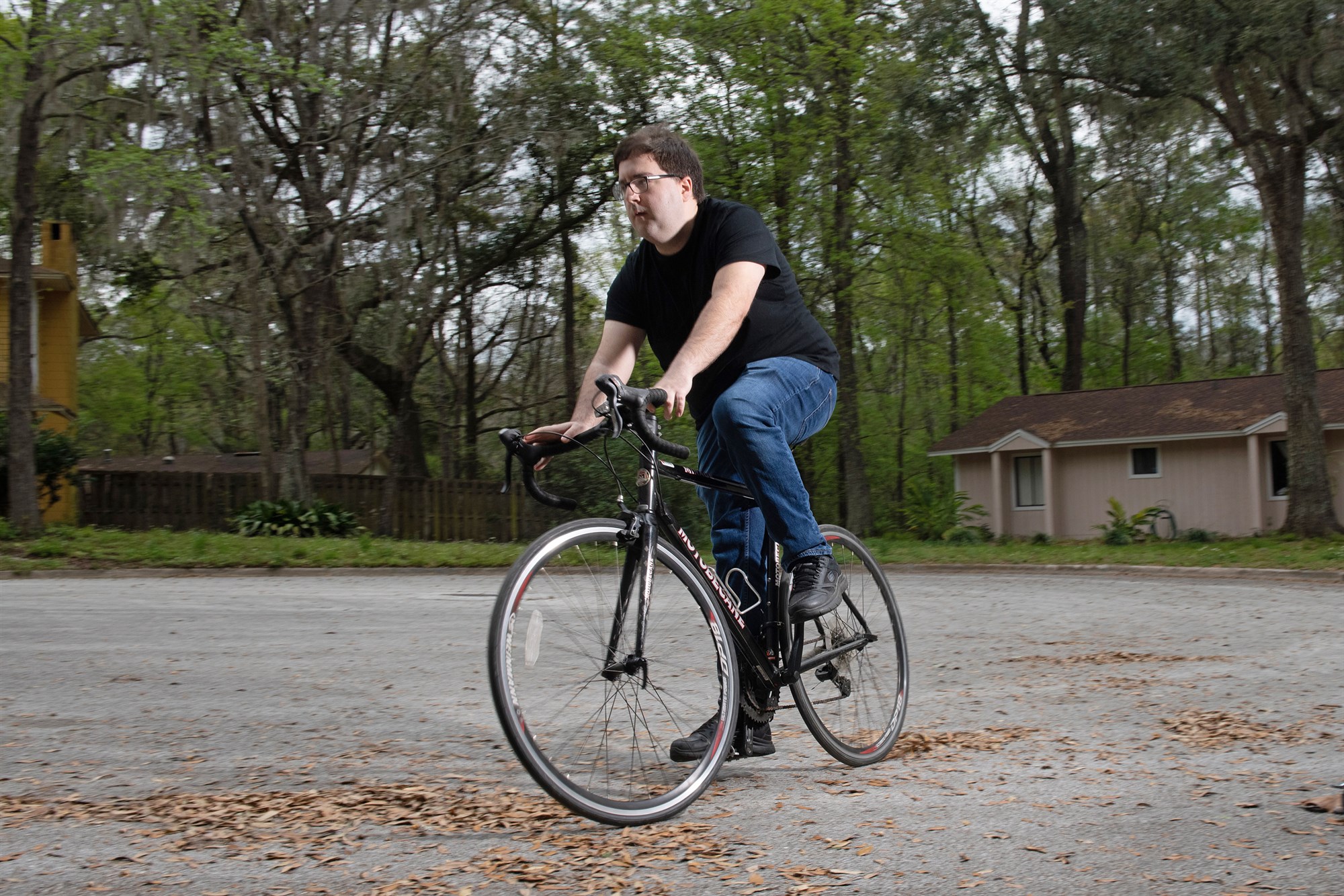
Google tracked his bike ride past a burglarized home. That made him a suspect.
The email arrived on a Tuesday afternoon in January, startling Zachary McCoy as he prepared to leave for his job at a restaurant in Gainesville, Florida.
It was from Google’s legal investigations support team, writing to let him know that local police had demanded information related to his Google account. The company said it would release the data unless he went to court and tried to block it. He had just seven days.
“I was hit with a really deep fear,” McCoy, 30, recalled, even though he couldn’t think of anything he’d done wrong. He had an Android phone, which was linked to his Google account, and, like millions of other Americans, he used an assortment of Google products, including Gmail and YouTube. Now police seemingly wanted access to all of it.
“I didn’t know what it was about, but I knew the police wanted to get something from me,” McCoy said in a recent interview. “I was afraid I was going to get charged with something, I don’t know what.”
There was one clue.
In the notice from Google was a case number. McCoy searched for it on the Gainesville Police Department’s website, and found a one-page investigation report on the burglary of an elderly woman’s home 10 months earlier. The crime had occurred less than a mile from the home that McCoy, who had recently earned an associate degree in computer programming, shared with two others.
Now McCoy was even more panicked and confused. He knew he had nothing to do with the break-in ─ he’d never even been to the victim’s house ─ and didn’t know anyone who might have. And he didn’t have much time to prove it.
McCoy worried that going straight to police would lead to his arrest. So he went to his parents’ home in St. Augustine, where, over dinner, he told them what was happening. They agreed to dip into their savings to pay for a lawyer.
The lawyer, Caleb Kenyon, dug around and learned that the notice had been prompted by a “geofence warrant,” a police surveillance tool that casts a virtual dragnet over crime scenes, sweeping up Google location data — drawn from users’ GPS, Bluetooth, Wi-Fi and cellular connections — from everyone nearby.
The warrants, which have increased dramatically in the past two years, can help police find potential suspects when they have no leads. They also scoop up data from people who have nothing to do with the crime, often without their knowing ─ which Google itself has described as “a significant incursion on privacy.”
Still confused ─ and very worried ─ McCoy examined his phone. An avid biker, he used an exercise-tracking app, RunKeeper, to record his rides. The app relied on his phone’s location services, which fed his movements to Google. He looked up his route on the day of the March 29, 2019, burglary and saw that he had passed the victim’s house three times within an hour, part of his frequent loops through his neighborhood, he said.
“It was a nightmare scenario,” McCoy recalled. “I was using an app to see how many miles I rode my bike and now it was putting me at the scene of the crime. And I was the lead suspect.”A powerful new tool
The victim was a 97-year-old woman who told police she was missing several pieces of jewelry, including an engagement ring, worth more than $2,000. Four days after she reported the crime, Gainesville police, looking for leads, went to an Alachua County judge with the warrant for Google.
In it, they demanded records of all devices using Google services that had been near the woman’s home when the burglary was thought to have taken place. The first batch of data would not include any identifying information. Police would sift through it for devices that seemed suspicious and ask Google for the names of their users.
Kenyon said police told him that they became particularly interested in McCoy’s device after reviewing the first batch of anonymized data. They didn’t know the identity of the device’s owner, so they returned to Google to ask for more information.
That request triggered the Jan. 14 notice the technology giant sent to McCoy, part of its general policy on notifying users about government requests for their information. The notice was McCoy’s only indication that police wanted his data.
Gainesville police declined to comment.
While privacy and civil liberties advocates have been concerned that geofence warrants violate constitutional protections from unreasonable searches, law enforcement authorities say those worries are overblown. They say police don’t obtain any identifying information about a Google user until they find a device that draws their suspicion. And the information alone is not enough to justify charging someone with a crime, they say.
Google geofence warrants have been used by police agencies around the country, including the FBI. Google said in a court filing last year that the requests from state and federal law enforcement authorities were increasing rapidly: by more than 1,500 percent from 2017 to 2018, and by 500 percent from 2018 to 2019.
“It’s a great tool and a great technology,” said Kevin Armbruster, a retired lieutenant with the Milwaukee Police Department, where he oversaw the use of high-tech investigative work, including geofence warrants.
Milwaukee police have used Google geofence warrants to solve an array of crimes, including homicides, shootings, a string of robberies and kidnappings and a sexual assault involving an abduction, he said. “I would think the majority of citizens in the world would love the fact that we are putting violent offenders in jail,” Armbruster said.
There have been very few court challenges to Google geofence warrants, mainly because the warrants are done in secret and defense lawyers may not realize the tool was used to identify their clients. One exception is an accused bank robber in Midlothian, Virginia, who is fighting the charge by arguing the geofence warrant used against him was illegal. That case is pending.
‘You’re looking at the wrong guy’
Once McCoy realized his bike ride had placed him near the scene of the crime, he had a strong theory of why police had picked his device out of all the others swept up by the warrant. He and Kenyon set out to keep them from getting any more information about him ─ and persuade them that he was innocent.
Kenyon said he got on the phone with the detective on the case and told him, “You’re looking at the wrong guy.”
For most of his life, McCoy said, he had tried to live online anonymously, a habit that dated to the early days of the internet when there was less expectation that people would use their real names. He used pseudonyms on his social media accounts and the email account that Google used to notify him about the police investigation.
But until then, he hadn’t thought much about Google collecting information about him.
“I didn’t realize that by having location services on that Google was also keeping a log of where I was going,” McCoy said. “I’m sure it’s in their terms of service but I never read through those walls of text, and I don’t think most people do either.”
Just before the start of his ordeal, he’d listened to a call-in radio debate about the Department of Justice’s fight with Apple over access to an iPhone left by a Saudi national who’d gunned down several people at an air base in Pensacola, Florida, in December. He remembered some callers saying they had no problem with law enforcement having access to phone data, arguing that people had nothing to worry about as long as they didn’t break the law. Now McCoy thought the callers weren’t considering predicaments like his.
“If you’re innocent, that doesn’t mean you can’t be in the wrong place at the wrong time, like going on a bike ride in which your GPS puts you in a position where police suspect you of a crime you didn’t commit,” McCoy said.
On Jan. 31, Kenyon filed a motion in Alachua County civil court to render the warrant “null and void” and to block the release of any further information about McCoy, identifying him only as “John Doe.” At that point, Google had not turned over any data that identified McCoy but would have done so if Kenyon hadn’t intervened. Kenyon argued that the warrant was unconstitutional because it allowed police to conduct sweeping searches of phone data from untold numbers of people in order to find a single suspect.
That approach, Kenyon said, flipped on its head the traditional method of seeking a search warrant, in which police target a person they already suspect.
“This geofence warrant effectively blindly casts a net backwards in time hoping to ensnare a burglar,” Kenyon wrote. “This concept is akin to the plotline in many a science fiction film featuring a dystopian, fascist government.”
Cleared by the same data
The filing seemed to give law enforcement authorities second thoughts about the warrant. Not long afterward, Kenyon said, a lawyer in the state attorney’s office assigned to represent the Gainesville Police Department told him there were details in the motion that led them to believe that Kenyon’s client was not the burglar. The state attorney’s office withdrew the warrant, asserting in a court filing that it was no longer necessary. The office did not respond to a request for comment.
Kenyon said that in a visit to his office, the detective acknowledged that police no longer considered his client a suspect.
On Feb. 24, Kenyon dropped his legal challenge.
The case ended well for McCoy, Kenyon said, but “the larger privacy fight will go unanswered.”
Even then, Kenyon wanted to make sure police didn’t have lingering doubts about McCoy, whom they still knew only as “John Doe.” So he met with the detective again and showed him screenshots of his client’s Google location history, including data recorded by RunKeeper. The maps showed months of bike rides past the burglarized home.
In the end, the same location data that raised police suspicions of McCoy also helped to vindicate him, Kenyon said. “But there was no knowing what law enforcement was going to do with that data when they got it behind closed doors. Not that I distrust them, but I wouldn’t trust them not to arrest someone.”
He pointed to an Arizona case in which a man was mistakenly arrested and jailed for murder largely based on Google data received from a geofence warrant.
McCoy said he may have ended up in a similar spot if his parents hadn’t given him several thousand dollars to hire Kenyon.
He regrets having to spend that money. He also thinks about the elderly burglary victim. Police said they have not made any arrests.
“I’m definitely sorry that happened to her, and I’m glad police were trying to solve it,” McCoy said. “But it just seems like a really broad net for them to cast. What’s the cost-benefit? How many innocent people do we have to harass?”
via: https://www.nbcnews.com/news/us-news/google-tracked-his-bike-ride-past-burglarized-home-made-him-n1151761
Photo Credit: Agnes Lopez / for NBC News

Students find cop’s gun in bathroom in middle of school day
An off-duty police officer is under investigation after they allegedly left a gun behind in a school bathroom that was discovered by three young students.
The incident happened on March 6 at about 2:30 p.m. at Catherine Cook School when three young girls told their teachers that they found a gun when they were inside a girl’s restroom, according to ABC News’ Chicago station WLS-TV.
Police said that school security responded to the scene and secured the firearm but, after a police report was filed, authorities discovered that the gun actually belonged to an off-duty Chicago police officer who worked as a security guard at the private institution.
An internal affairs investigation was opened at the school and, according to authorities, the officer will likely face some kind of discipline but will most likely not face any criminal charges in the incident.
The three girls who found the gun in the bathroom at the kindergarten through eighth grade school were unharmed and school officials could not immediately be reached for comment.
The police officer who is allegedly involved in this incident has not yet been identified
Photo Credit: abcnews.com

Will Sunday be the last time we ‘spring forward?’
In 2019, the state legislature passed a bill to allow Washington to remain permanently on daylight saving time.
Yet a few months later, we “fell back.” Now, it’s time to “spring forward” again at 2 a.m. on Sunday, March 8. But it (theoretically) could be for the last time, depending on what happens at the federal level between now and November.
The problem is, staying permanently on daylight saving time (the “sprung forward” time) has not yet been recognized by the federal government. The states that currently do not recognize DST, Hawaii and most of Arizona, are allowed to do so because they remain on standard time, which is allowed under federal law.
In 2019, House Bill 1196 passed both the Washington state House and Senate and was signed into law by Gov. Jay Inslee on May 8, 2019. Now, Congress needs to approve a state’s ability to remain permanently on DST for Washington and seven other states that have passed similar legislation to be able to do so.
Oregon and California are among those seven other states, meaning it would be a shift for the entire West Coast if approved by Congress. DST currently lasts from March to November, meaning it already makes up eight months of the year.
It’s not yet known when Congress may consider such a law to allow for permanent DST. Sen. Marco Rubio (R-Florida) put forward the Sunshine Protection Act in 2019 that would have forced all states to remain on DST, but it fizzled and has not yet been reintroduced. Florida is another state that has passed a bill to enact permanent daylight saving time across the country.
There are many reasons for the decision to flip permanently. It had been discussed several times in the recent past, including bills proposed in 2017 and 2015.
The reasons are simple, and obvious to anyone who wakes up the days immediately following a time change: When the clock changes, humans have a hard time adapting, which can cause stress.
“When we spring forward, the clocks on the wall advance, but our body clocks do not change so readily,” University of Oregon organizational psychologist David Wagner wrote in a 2018 opinion piece. “It generally takes a few days for us to adapt to the time change in a way that allows us to fall asleep at our typical time. The upshot is that Americans sleep approximately 40 minutes less than usual on the Sunday to Monday night following the switch.”
For a slew of additional reasons staying on daylight saving time is beneficial, click through the slideshow above.
Meanwhile, while we wait for Congress to allow the change to permanent DST, Washingtonians should set their clocks forward one hour starting at 2 a.m. on Sunday.
Original article ———> https://komonews.com/news/local/will-sunday-be-the-last-time-we-spring-forward

Bernie Sanders Has Already Won the Democratic Primary
At a debate last month, Bernie Sanders’s rivals for the Democratic presidential nomination were asked if they were concerned about the party possibly graduating a democratic socialist to the general election. The only ones who made their worry perfectly clear were Joe Biden and Amy Klobuchar.
That’s when Sanders won the Democratic primary.
At debates before then, some candidates went out of their way to describe what they’d accomplished or were proposing as “progressive,” especially if they were being maligned as (gulp) moderates.
“Look, we all have big progressive plans,” Biden said, as if to reassure Democratic voters. Michael Bennet touted bipartisan immigration legislation that he helped to write as “the most progressive DREAM Act” ever put together.
That’s when Sanders won the Democratic primary.
He won it when his rivals talked more about whether Medicare for All could ever get through Congress than about whether such a huge expansion of the federal government was a good idea in the first place. He won it when they competed to throw many more trillions than the next candidate at climate change. He won it when the disagreement became not about free tuition at public colleges but about the eligibility of students from families above a certain income level.
He and his supporters shouldn’t feel defeated after Super Tuesday. They should take a bow.
Sanders had a disappointing showing, yes, and Biden emerged as the likeliest Democratic nominee. That prompted lamentations from Sanders’s fans that the status quo was prevailing, the revolution was being dashed and the Democratic Party was mired in squishy moderation.
Nonsense. In the context of previous presidential elections, Biden isn’t so very moderate. Nor are Klobuchar, Pete Buttigieg or other Democratic aspirants lumped in that category. They have carved out positions to the left of the party’s nominees over the past two decades, including the most recent three: Hillary Clinton, Barack Obama and John Kerry.
And you know who gets the most credit for that? Sanders. The runner-up is Elizabeth Warren, who remains in the race spiritually if not physically, having also planted and cultivated ideas that spread far beyond her. Mike Bloomberg’s advocacy of a 5 percent surtax on incomes of over $5 million annually spoke to the pressure that her signature “wealth tax” put on Democrats to address how they would rein in huge fortunes. There was more attention to that issue in this Democratic primary than in primaries past.
While Sanders’s fellow candidates didn’t parrot his vocabulary and denounce “oligarchs” and “oligarchy,” they spoke expansively about gross income inequality and the need to tackle it. That largely reflected how wealth had been concentrated over recent decades. But it owed something, too, to Sanders’s right and righteous demand that America have this conversation.
Biden’s proposed tax increases of about $3.4 trillion over a decade are more than double what Clinton was advocating in 2016, while Buttigieg’s were more than quadruple. How is that moderate?
The scare that Sanders put into Clinton four years ago and the organization that he built have transformed the party, moving it even further left than the questionable electoral successes of his movement justify. Although there is scant evidence in recent elections that a Democrat running on Sanders’s platform can win anywhere but in decidedly blue districts and states, that platform colored the Democratic primary in a bold and indelible way. Candidates disrespected it at their peril.
As the Democratic race narrowed to about half a dozen plausible contenders, Klobuchar asserted herself — and was frequently characterized as — a sort of common-sense centrist. But her actual positions and proposals told a different story. As my fellow Times Op-Ed columnist David Leonhardt recently wrote: “She wants to raise taxes on the rich, break up monopolies, vastly expand Medicare, fight climate change, admit more refugees, allow undocumented immigrants to become citizens, ban assault weapons and require universal background checks. A Klobuchar administration would probably be well to the left of the Obama administration.” It would be closer to Sanders territory.
“All the lead contenders are running on the most progressive agendas to ever dominate a Democratic primary,” wrote Vox’s Ezra Klein and Roge Karma late last year. They noted that this primary’s moderates would have been considered leftists in the recent past. “As a result,” they added, “if Biden or Buttigieg actually win the nomination, they will be running on the most progressive platform of any Democratic nominee in history.”
Buttigieg was designated a moderate despite his support for abolishing the Electoral College and expanding the Supreme Court, both of which would be profound changes in American politics and governance.
Biden was designated a moderate despite declaring that the Equality Act, which would offer sweeping federal protection against discrimination for L.G.B.T.Q. people, didn’t merely have his support; it would be his top legislative priority. He was designated a moderate despite being among the 10 candidates at a Democratic debate early on who all raised their hands when asked if they supported extending health care benefits to undocumented immigrants.
He was designated a moderate despite calling for an expansion of Obamacare — including the addition of a Medicare-like public insurance option — that would cost $750 billion over a decade; despite his desire to spend another $750 billion on education; despite a $1.7 trillion climate plan.
All that spending: I’m struck by how infrequently and wanly Democratic candidates have mentioned fiscal responsibility, deficits or debt. In prior elections, candidates talked some about that to avoid being tagged as naïvely starry-eyed liberals. But the sky was the limit this time around. Sure, Sanders’s rivals ultimately grilled him on his math, suggesting that his particular plans were ruinously lavish. But enormous spending as an idea was seldom if ever under attack. In fact, it was in vogue.
And Sanders’s grilling was a long time coming. The wonder of most of the debates was how carefully his competitors tiptoed around him, acutely conscious of the moral force that he had come to wield in the party and the passion of his supporters, whom they didn’t want to alienate. He became the enemy that no Democrat wanted to have.
On the day after Super Tuesday, when Biden won 10 of 14 states, including a few where Sanders had beaten Clinton in the 2016 primary, Sanders asked, “Does anyone seriously believe that a president backed by the corporate world is going to bring about the changes in this country that working families and the middle class and lower-income people desperately want?”
Well, yeah, I do. Biden won’t make all of those changes, and they may be more restrained than Sanders would like or than the situation demands. The arc of history bends toward justice — it doesn’t hurtle there.
But Biden’s backing extends well beyond corporations. His proposals demonstrate concern for those working families. And his goals echo Sanders’s goals, for one reason above all others. Sanders already won.

Utah police department says someone stole all of the toilet paper from its public restrooms
(Meredith) – A Utah police department said someone stole all of the toilet paper in its public restrooms, and the bizarre theft may be tied to coronavirus fears.
The Kaysville Police Department wrote about the incident in a Facebook post on Friday morning, urging the public to stop stealing its toilet paper.
“For those of you preparing for the coronavirus, what is the need for hoarding toilet paper?” the post reads. “The Kaysville Community must be in a state of crisis that someone has resorted to obtaining all the toilet paper from the KPD’s public restrooms.”
It’s unclear how many rolls were taken, but it was enough to trigger a PSA from the police department.
“We love our community, and we are here to serve you, but cops need toilet paper too!” the department pleaded.
So far, Utah has not documented any cases of someone in the state contracting the coronavirus, according to The Salt Lake Tribune.
Photo Credit: kmov.com

Connecticut beverage company releases ‘Coronavirus Cocktail’ soda
NEW BRITAIN, CT (WFSB) — A local beverage company out of New Britain released a new green colored soda that is causing a stir on social media.
On Saturday morning, Avery’s Soda announced that their newest lime-orange flavor, Coronavirus Cocktail, is only available for a limited amount of time.
“Some folks think our latest flavor is in poor taste, but everyone who tries it says it pastes pretty good,” the beverage company said.
Although most of the feedback is positive, one person chimed in and said, “people are dying. this joke is in poor taste”.
At the bottom of the post, Avery’s Soda asked that people wash their hands.
The company was founded in the summer of 1904 by Sherman F. Avery, according to their website.
Located at 520 Corbin Avenue, they bottle and small-batch craft soda in 35 flavors.
Photo Credit: Avery Soda
9-year-old reportedly kills himself 2 years after mother’s suicide
ST. CLAIR COUNTY, Ill. (KMOV.com) — An investigation is underway after a 9-year-old boy reportedly killed himself in the Metro East.
The St. Clair County Coroner’s Office confirmed the boy died from an apparent hanging in a Brooklyn, Illinois apartment.
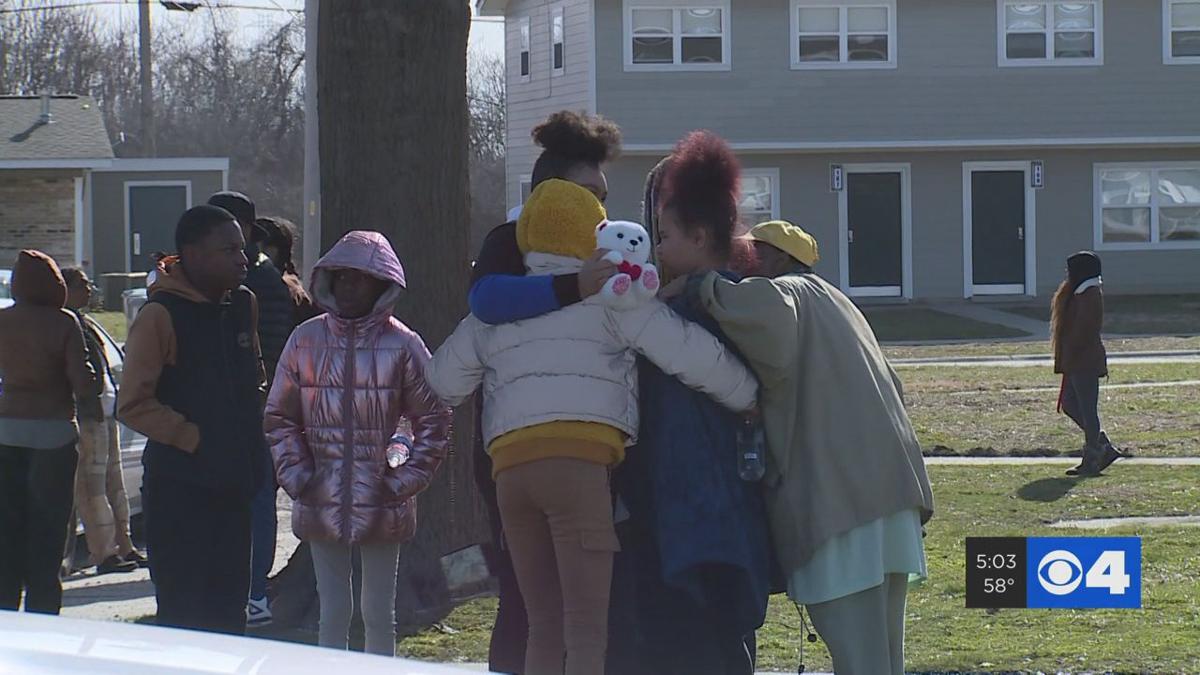
As word spread through the Thomas Terry apartment complex about the boy’s death, dozens of neighbors came out of their homes to console each other.
Many were hugging and crying.
They tried to console the boy’s father as he walked around the complex, seemingly in shock, dealing with the loss.
“I’m still trying to take in what’s happening, get the particulars, because I don’t know everything,” said E.J. Johnson, the boy’s great uncle.
Police on the scene said they are looking at the suicide as a possible result of bullying, but it was early in the investigation. The Belleville News Democrat spoke to a family member who said the boy accidentally suffocated while doing a social media challenge.
Research from the CDC showed in 2007, suicides among children age 10 to 14 were declining.
Then, over the next decade, the numbers nearly tripled. Now, suicide is one of the leading causes of death for children in that age range, thanks in part to social media increasing bullying’s prevalence.
It’s easier, it’s meaner and there are fewer consequences for the bullying because it can be done in private,” said Jessie Vance, a child counselor with Provident Crisis Services.
The family told News 4 the boy’s mother committed suicide two years ago.
Photo Credit: kmov.com
Group Stomps 15-Year-Old Girl On Brooklyn Sidewalk
NEW YORK (CBSNewYork) – Police are searching for a group of suspects accused in a violent gang assault and robbery of a 15-year-old girl in Brooklyn.
Investigators believe this was a retaliation attack for another incident that took place earlier. Police have not said what the earlier incident was about.
The brutal assault was caught on camera shortly after 4 p.m. Thursday on Utica Avenue near Sterling Place in Crown Heights.
Suspects in the crowd take turns stomping on her, kicking her, taking her sneakers, phone and debit card.
Watch: Brutal Gang Attack Caught On Video
“For so many kids to jump on one individual, it’s just ridiculous,” said Carlita Gorden, who works at a nearby salon and came to the scene when she heard screaming.
“Her book bag, she was grabbing on her book bag. No shoes, just sitting on the floor with no shoes,” Gorden added. “Then you see the little one holding her sneakers, running away. Come one, it’s sad. We have to do better as a community. We have to do better as people in general. That this little girl could’ve lost her life, it’s really sad.”
OUTRAGE:this is sickening video of a 15 year old girl viciously attacked by a group of school children. One young man takes the sneakers right off the unconscious victim’s feet. The teenager is in the hospital recovering. We CAN NOT allow this behavior in our community.
The chaos took place right in front of an electronics store owned by Anita Peavy, who says she quickly brought down the gate and went outside, CBS2’s Dave Carlin reported.
“I didn’t need no trouble. I [was] scared the kids [would] come in here and just go crazy the way they was going crazy out there,” Peavy said. “I have never witnessed nothing like that yet in my life… To see such a small kid just dropping on one kid, it was crazy.”
Peavy – a registered nurse – then went to see if she could help the victim.
“She was bleeding like crazy,” Peavy said. “We just tried to keep her calm and sitting there until the ambulance come.”
The victim is being treated at the hospital for bruising and swelling to her face and body.
Longtime community activist Tony Herbert says the victim is his cousin.
“She’s traumatized right now. She’s in a bit of pain,” he said. “[Her] mom is just devastated right now to think that she sent her daughter to go to school to turn around and hear that she was a victim of an assault in the very city that she spent her life in.”
Police say five suspects turned themselves in Friday. All five are minors.
They’re still looking for the remaining suspects.
Brooklyn Borough President Eric Adams condemned the attack.
Recently, the NYPD assigned more than 300 officers to serve as youth coordinators to crack down on crimes where offenders are younger than 18 years old.
Anyone with information about the suspects is asked to call the NYPD’s Crime Stoppers hotline at 1-800-577-TIPS (8477) or 1-888-57-PISTA (74782) for Spanish. You can also submit a tip via the Crime Stoppers website, by tweeting @NYPDTips or by texting 274637.
via: https://newyork.cbslocal.com/2020/03/06/group-stomps-girl-on-brooklyn-sidewalk/
Photo Credit: newyork.cbslocal.com