

MO nurse resigns after being told she can’t wear a mask around patients
RICHMOND HEIGHTS, Mo. (KMOV.com) — A local nurse says she recently resigned after she says she wasn’t allowed to wear a mask while working with patients.
The nurse has 32 years of experience and worked for St. Mary’s hospital. She asked to remain anonymous to protect herself.
The head of a state nursing organization said concerns about personal protection equipment (PPE) and the safety of nurses are on the rise.
“Nurses don’t want to be part of the problem, they want to be part of the solution,” the nurse told News 4.
She says she bought N-95 masks with her own money so she didn’t jeopardize the hospital’s supply. She doesn’t work with coronavirus patients but wanted protection for her and her co-workers because people not showing symptoms can spread the virus.
“I walked into work with my mask on and my boss said I had to take it off. I told her I would not take it off or I would quit,” the nurse said. “It was for my safety, my coworkers safety, my patient’s safety.”
So she resigned and she says officials with the hospital told her to leave without a two-week notice.
“I really found it shocking that for me to protect myself during a pandemic that they would let a nurse walk out the door,” the nurse said.
St. Mary’s said the following to News 4:
“We believe there is no basis in fact to the allegations that nursing leaders have directed nurses to work in an unsafe manner. We do currently have restrictions on hospital staff supplying their own PPE as we cannot guarantee that personal PPE is up to CDC standards and has been properly sterilized. “Build a dynamic banking and financial enterprise.Transform operations, operating models and enterprise architecture to become more agile and efficient, allowing you get to market faster.Ad By IBM See More
“It just blows my mind that when our nurses are wanting to wear protective equipment that they are being told they’re not able to,” Heidi Lucas said, the director of the Missouri Nurses Association.
Lucas said calls with concerns about the safety of nurses are on the rise.
“If we lose our healthcare workforce, if our healthcare workforce gets sick in mass what are we going to do?” Lucas said.
Metro bus drivers are allowed to wear N-95 masks. A former St. Mary’s nurse is asking what about nurses. She says she doesn’t regret taking a stand.
“I would regret it if I made my family sick, if I made my other coworkers. If I made a patient sick,” the nurse said. “I would never get over that.”
Lucas said one Kansas City hospital is allowing all its employees to wear masks.
St. Mary’s Hospital is saying first and foremost, the safety of patients and staff is the top priority.
The nurse says any interaction with patients can put hospital staff at risk because people can carry the virus and give it to others without showing symptoms. She told the story of another worker who tried to practice social distancing.
“She sits at a desk and so family members come up to talk with her. Early on I said you need to put a sign up to tell people to step back,” the nurse said. “They made her take it off and she’s at DePaul hospital right now and she’s waiting on her result and she sounds terrible.”
The number of nurses expressing concern about working conditions is growing.
Photo Credit: kmov.com

These Common Household Products Can Destroy the Novel Coronavirus
News of stores running out of hand-sanitizing gels and chlorine wipes may have you worried about how to protect your family at home as COVID-19 spreads. But plain old hand soap will go a long way.
“It isn’t possible to disinfect every surface you touch throughout your day,” says Stephen Thomas, M.D., chief of infectious diseases and director of global health at Upstate Medical University in Syracuse, N.Y. “The planet is covered with bacteria and viruses, and we’re constantly in contact with these surfaces, so hand-washing is still your best defense against COVID-19.”
You need to amp up your typical cleaning routine only if someone in the household exhibits signs and symptoms of a respiratory infection or if you live in an area with known cases of COVID-19. In that scenario, Thomas says, “Clean high-traffic areas that get touched frequently, such as kitchen counters and bathroom faucets, three times a day with a product that kills viruses.”
The good news is that coronaviruses are some of the easiest types of viruses to kill with the appropriate product, according to the Environmental Protection Agency. “It has an envelope around it that allows it to merge with other cells to infect them,” Thomas says. “If you disrupt that coating, the virus can’t do its job.”
If you can’t get your hands on hand sanitizer or Clorox wipes, see below for a number of cleaning products that you probably have around the house already, and that stores are more likely to have in stock, that are effective in deactivating the novel coronavirus. We also tell you which products don’t work and when you can expect retailers to stock back up on cleaning supplies.
Cleaning Products That Destroy Coronavirus
Soap and Water
Just the friction from scrubbing with soap (any kind of soap) and water can break the coronavirus’s protective envelope. “Scrub like you’ve got sticky stuff on the surface and you really need to get it off,” says Richard Sachleben, an organic chemist and a member of the American Chemical Society. Discard the towel or leave it in a bowl of soapy water for a while to destroy any virus particles that may have survived.
Using antibacterial soap won’t give you added protection against the coronavirus because it kills bacteria, not viruses. You can still use it as long as you scrub.
Shop Household Soap on Walmart
Bleach
The Centers for Disease Control and Prevention recommends a diluted bleach solution (⅓ cup bleach per 1 gallon of water or 4 teaspoons bleach per 1 quart of water) for virus disinfection. Wear gloves while using bleach, and never mix it with ammonia—or anything, in fact—except water. (The only exception is when doing laundry with detergent.) Once mixed, don’t keep the solution for longer than a day because the bleach will lose potency and can degrade certain plastic containers.
“Always clean the surface with water and detergent first, since many materials can react with bleach and deactivate it,” Sachleben says. “Dry the surface, then apply the bleach solution and let it sit for at least 10 minutes before wiping it off.”
Bleach can corrode metal over time, so Sachleben recommends that people not get into the habit of cleaning their faucets and stainless steel products with it. Because bleach is harsh for many countertops as well, you should rinse surfaces with water after disinfecting to prevent discoloration or damage to the surface.
If you can’t find liquid bleach, you can use bleach tablets instead. You may have seen Evolve bleach tablets, which dissolve in water, at Walmart or on Amazon. Just follow the dilution instructions on the packaging (1 tablet is equal to ½ cup liquid bleach). A label on the bottle states the product is not a disinfectant, but chemically, it’s the same as liquid bleach. A company spokesperson at Custom Bottling & Packaging, which acquired Evolve three years ago, says the company hasn’t had the time or resources to put their product through the Environmental Protection Agency’s registration process that would allow them to make disinfecting and sanitizing claims. As of this update, Evolve is not experiencing any shortages and is supplying hospitals, research centers, and correctional facilities.
Isopropyl Alcohol
Alcohol solutions with at least 70 percent alcohol are effective against the coronavirus on hard surfaces. First, clean the surface with water and detergent. Apply the alcohol solution (do not dilute it) and let it sit on the surface for at least 30 seconds to disinfect. Alcohol is generally safe for all surfaces but can discolor some plastics, Sachleben says.
Hydrogen Peroxide
According to the CDC, household (3 percent) hydrogen peroxide is effective in deactivating rhinovirus, the virus that causes the common cold, within 6 to 8 minutes of exposure. Rhinovirus is more difficult to destroy than coronaviruses, so hydrogen peroxide should be able to break down the coronavirus in less time. Pour it undiluted into a spray bottle and spray it on the surface to be cleaned, but let it sit on the surface for at least 1 minute.
Hydrogen peroxide is not corrosive, so it’s okay to use it on metal surfaces. But similar to bleach, it can discolor fabrics if you accidentally get it on your clothes. “It’s great for getting into hard-to-reach crevices,” Sachleben says. “You can pour it on the area, and you don’t have to wipe it off because it essentially decomposes into oxygen and water.”
Shop Hydrogen Peroxide on Walmart
What Not to Use Against Coronavirus
Homemade Hand Sanitizer
You’re probably seeing all sorts of hand sanitizer recipes floating around your social media and the internet, but Thomas at Upstate Medical University advises against making your own. “People don’t know the right ratios to use, and the internet won’t give you the right answer,” he says. “Not only can you hurt yourself, but it could give you a false sense of security.”
Sachleben seconds that advice. “I’m a professional chemist, and I don’t mix my own disinfectant products at home,” he says. “Companies spend a bunch of time and money to pay chemists specifically to formulate hand sanitizers that work and that are safe. If you make it yourself, how can you know if it’s stable or if it works?”
Vodka
There are widely circulated recipes on the internet using vodka to combat the coronavirus. A couple of vodka makers, including Tito’s, have already come out with statements telling their customers that their 80-proof product does not contain enough ethyl alcohol (40 percent compared with the 70 percent required) to kill the coronavirus.
Distilled White Vinegar
Disinfection recommendations using vinegar are popular online, but there is no evidence that they are effective against the coronavirus. (Read about the 9 things you should never clean with vinegar.)
Tea Tree Oil
While there is preliminary research that suggests tea tree oil may have an effect against the herpes simplex virus, there is no evidence that it can kill coronaviruses.
When Retailers Expect More Supplies
Wondering when you’ll be able to get your hands on hand sanitizer, Lysol wipes, Clorox sprays, etc., at your local store? CR spoke to major chains, including Costco, CVS, Kroger, Stop & Shop, Target, and Walgreens. They are still seeing temporary shortages and are restocking as quickly as their suppliers allow. Most stores have instituted purchase limits to prevent hoarding.
“The overbuying caused the supply chain to short-circuit,” says Burt Flickinger, managing director at Strategic Resource Group, a retail and consumer goods consulting firm. “It took a few weeks for the manufacturing plants to catch up, but brands such as Clorox, 3M, and Procter & Gamble will be fulfilling 75 percent of their orders in the next week.” He estimates that store shelves and Amazon should be restocked with cleaning products within the first two weeks of April.
You may still have a hard time finding hand sanitizer, however. Purell announced March 24 that shipments of hand sanitizer will be prioritized to workers deemed critical by the federal government, including healthcare workers, first responders, and grocers.
And toilet paper and paper towels will continue to be scarce. “The paper companies are struggling to meet demand,” Flickinger says. “They’re supplying about 25 percent of what retailers are ordering.” Your best bet is to ask the store manager when the trucks make their deliveries and be there when they’re unloading.
—Additional reporting by Mary Farrell
Editor’s Note: This story, originally published March 9, 2020, was updated to include additional information about bleach tablets, tea tree oil, and retailers’ inventory of disinfectants and other supplies.
via: https://currently.att.yahoo.com/att/common-household-products-destroy-novel-235249369.html
Photo Credit: currently.att.yahoo.com
Pierce County coronavirus cases now at 231 with five deaths
Pierce County on Friday reported 45 new confirmed cases and another death in the coronavirus pandemic.
The county now has 231 cases and five deaths out of 4,310 tested by University of Washington virology lab and state public health labs.
The latest death from Lakewood, a man in his 80s with underlying health conditions, follows two also from Lakewood reported Thursday, a man and woman both in their 70s, also with underlying health conditions.
Pierce County’s case numbers from Friday are below, with Thursday’s numbers in parentheses.
▪ Bonney Lake: 6 (5)
▪ Central Pierce County: 11 (7)
▪ East Pierce County: 9 (7)
▪ Edgewood/Fife/Milton: 13 (12)
▪ Frederickson: 7 (6)
▪ Gig Harbor area: 14 (13)
▪ Graham: 6 (5)
▪ JBLM: 3 (no change)
▪ Key Peninsula: 2 (1)
▪ Lake Tapps/Sumner area: 7 (6)
▪ Lakewood: 12 (10)
▪ Parkland: 17 (13)
▪ Puyallup: 16 (14)
▪ South Hill 10 (6)
▪ South Pierce County: 4 (4)
▪ Southwest Pierce County 3 (no change)
▪ Spanaway 8 (5)
▪ Tacoma: 75 (60)
▪ University Place: 8 (6)
On Thursday, Tacoma-Pierce County Health Department again changed its reporting methods, adding more cities to the list and redistributing case numbers to different cities as it removed more general county locator descriptions.
As case numbers have grown in the county, the health department has adjusted its reporting style and has added a map to view case locations on its website.
The outbreak of the coronavirus, which causes COVID-19 respiratory disease, has now claimed five lives in the county, including three from Lakewood, one from Puyallup and one from Spanaway.
Underlying medical conditions have been tied to many of the deaths. On Friday, the health department issued a reminder on its blog of what classified as underlying conditions putting patients in the high-risk category:
▪ Heart disease
▪ Diabetes
▪ Lung disease
▪ HIV
▪ Asthma
▪ Pregnancy
▪ Auto-immune disorders
▪ Recent surgery
▪ Cancer treatment
▪ Severe obesity
Read more here: https://www.thenewstribune.com/news/coronavirus/article241569046.html#storylink=cpy
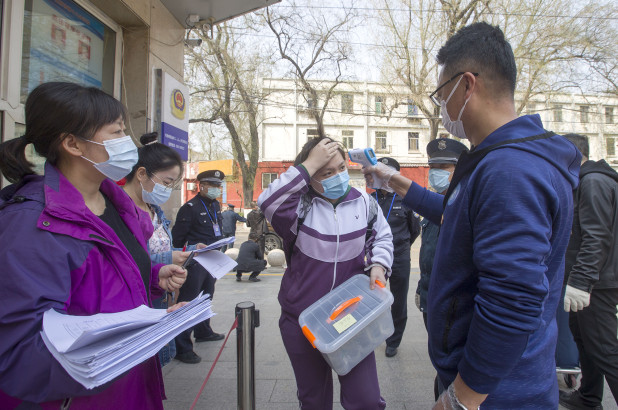
Up to 10 percent of recovered coronavirus patients test positive again, report says
As many as 10% of recovered coronavirus patients in China tested positive again after being discharged from the hospital, according to a report.
Doctors on the front lines of the outbreak in Wuhan, China — where the virus emerged — reported that between 3 and 10% of cured patients became reinfected with the illness, though it’s unclear whether they were contagious the second time, the South China Morning Post reported.
Tongji Hospital, which identified the first COVID-19 case, confirmed that five of 145 patients — a little over 3% — tested positive again in nucleic acid tests, according to state broadcaster CCTV.
“So far there is no evidence to suggest that they are infectious,” said Wang Wei, the hospital’s president.
He said the five patients who tested positive again did not have any symptoms and none of their close contacts had been infected.
Wang added that surveillance of similar patients showed that 80 to 90% had no trace of the virus in their system one month after being discharged from the hospital, according to the report.
But, he said, these are just “small samples” and “not enough to assure us of the validity of our initial findings.”
“We need a large-scale epidemiological study to guide our disease surveillance and prevention works,” Wang said.
Meanwhile, other quarantine facilities in Wuhan have seen about 5 to 10% of their recovered patients test positive again. The findings were reported by the health news outlet Life Times, which is affiliated with state-run newspaper People’s Daily.
The studies come as health officials around the world are testing the concept of taking plasma from someone who has been infected, processing it and injecting the antibodies into a sick person to stimulate their immune system.
Photo Credit: Top Photo/Sipa USA
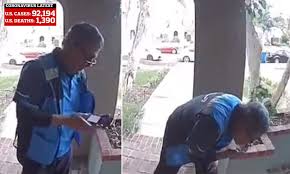
Amazon deliveryman caught spitting on package in vile video
Revolting video captured by a doorbell camera has caught an Amazon deliveryman apparently spitting on a package on the customer’s front porch and using his hand to smear his saliva.
“I received the box and saw a big wet spot and then checked the camera!” the horrified resident, Marcus Martinez, wrote on Twitter.
The disgusting incident amid the coronavirus pandemic occurred Thursday evening in the Hancock Park neighborhood of Los Angeles, according to TMZ.
The footage shows the man, who is wearing a vest with the Amazon logo on the back, leaning over to spit on the package and then wiping it with his hand before apparently snapping a photo of his dastardly delivery.
Sources told TMZ that a friend of the resident contacted Amazon, whose customer service representative gasped in horror while viewing the vile video.
The rep later said the deliveryman, who worked for a third-party service, has been reported.
A neighbor also posted the nauseating tracking photo along with a strong message to Amazon.
“I’d like to believe this was an honest mistake. PLEASE make sure your staff is educated and taking all the necessary precautions!” the message says.
An Amazon spokesperson told The Post in an email: “This is clearly not representative of drivers who deliver for Amazon and the care they take for customers around the world every day. We are aggressively investigating to understand what may have occurred in this situation. If it truly was a malicious act by the driver, we will be sure he is held accountable, up through and including law enforcement action.”
People who intentionally spread the coronavirus could be charged with terrorism for the “purposeful exposure and infection of others,” according to a Justice Department memo, CNN reported.
via: https://nypost.com/2020/03/27/amazon-deliveryman-caught-spitting-on-package-in-vile-video/
Photo Credit: dailymail.co.uk
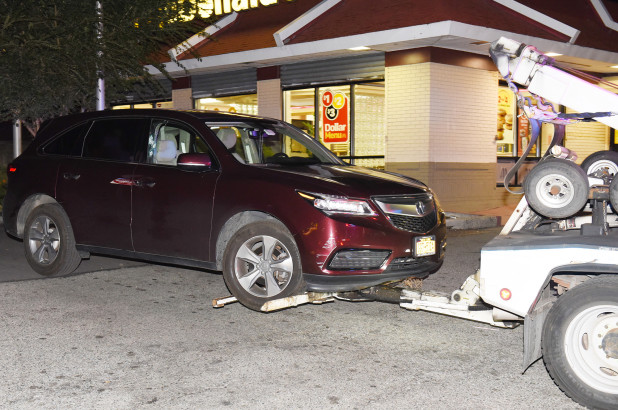
Son accused of ordering hit on mobster dad at McDonald’s wants out of jail over coronavirus
The man accused of paying $200,000 to have his allegedly mobbed-up father whacked in the drive-thru of a Bronx McDonalds — while the wiseguy was ordering a coffee — wants to get out of jail to avoid catching coronavirus.
Attorneys for Anthony Zottola Sr. said in papers filed late on Friday that he is willing to put up a $5 million bond to get sprung from Manhattan’s Metropolitan Correctional Center and stay under house arrest while he awaits trial.
Zottola Sr. is accused of plotting with his nine codefendants to murder Sylvester “Sally Daz” Zottola. They all could face life in prison or the death penalty if convicted.
Anthony Zotolla Sr.’s attorneys said that keeping their client in MCC also affects their ability to work with him to protect him from the “harshest of penalties available in the federal system.”
As of Friday, two inmates at the roughly 700-prisoner MCC in Lower Manhattan have tested positive for COVID-19, according to the US Bureau of Prisons.
In filing the request, Zottola joins a long list of high-profile prisoners who have asked to be released as COVID-19 tears through jails across the New York City area.
Many inmates have provided specific health reasons — such as age and medical conditions — to justify their release.
On Thursday, for example, disgraced R&B legend R. Kelly, 53, said that both his age and the fact that he recently underwent hernia surgery warrant his release.
But the 41-year-old Zottola doesn’t provide any similar excuse — arguing just that MCC presents a “gratuitous risk” to his health.
The feds allege that Zottola plotted his father’s murder so he could take control of Salvatore Zottola’s illegal gambling ring — and offered to pay $200,000 to get the job done.
The feds say that when Anthony Zottola Sr. would text with codefendant Bushawn “Shelz” Shelton to plot the hit, the two men used morbid film analogies as code for how it would play out — the gunman would be the “director” and Sally Daz “the actor” to be shot for the “final scene,” court papers state.
This isn’t the first time that Zottola has asked to be able to enjoy the comforts of home while his case proceeds.
Zottola previously offered to put up a $5 million bond for his release but Brooklyn Federal Judge Raymond Dearie shot down the request, saying the charges against him were too “serious and disturbing” to allow him to wait it out at home.
Photo Credit: Christopher Sadowski

British woman goes shopping with bizarre self-isolation method amid coronavirus crisis
There’s a pandemic — and she’s having a ball!
A British woman has taken self-isolation on the road – by walking inside a giant inflatable orb to go shopping amid the coronavirus crisis, according to The Sun.
The woman left customers and workers at the Morrisons store in Herne Bay, Kent, chuckling as she went zorbing through the aisles with an assistant in tow who plucked items from the shelves for her.
“She’s really germaphobic,” the self-described “carer’ said as he rubbed the ball with antiseptic wipes in what appeared to be a stunt.
Eventually, store workers asked the pair to get the ball rolling and leave the premises.
Photo Credit: Newsflare
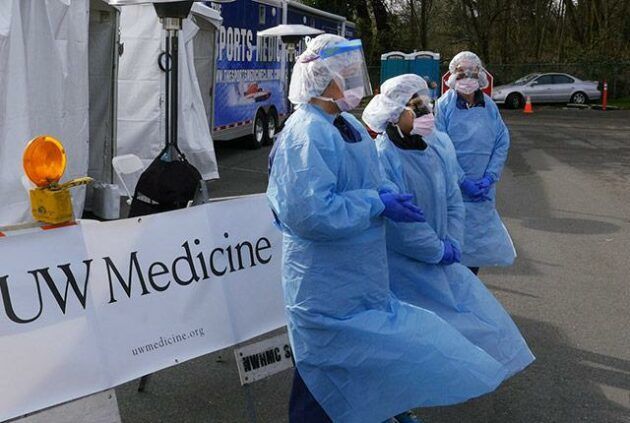
Univ. of Washington researchers predict 80,000 COVID-19 deaths in U.S. by July
If gaps in health care resources aren’t filled, more than 80,000 Americans will die over the next four months due to the coronavirus pandemic, epidemiologists at the University of Washington predict.
The grim forecast — based on an analysis of statistics from the World Health Organization, as well as from national and local governments and hospitals — is laid out today in a research paper that’s being submitted to the MedRxiv preprint server but hasn’t yet been peer-reviewed.
Researchers at the UW’s Institute for Health Metrics and Evaluation say their forecast takes current policies on social distancing into account. The problem is that shortages of hospital beds and medical supplies are projected to boost the death toll nevertheless.
Peak excess demand is projected to occur in the second week of April, when the researchers predict a shortage of 64,000 beds and 19,000 ventilators. “The date of peak excess demand by state varies from the second week of April through May,” the researchers say.
With those inputs, the computer models project a total of 81,114 deaths in the U.S. over the next four months. Most of those deaths are expected to occur during April, peaking at more than 2,300 deaths per day. That rate is projected to drop below 10 deaths per day sometime between May 31 and June 6.
There are also state-by-state projections of hospital resource usage and deaths. In Washington state, for example, the peak resource use is projected to occur on April 19, the death rate is projected to rise to a maximum of 27 per day, and total COVID-19 deaths are projected to amount to 1,429 through Aug. 4. As of today, Washington state’s cumulative COVID-19 death toll is 147.
The researchers say patients suffering from other diseases will face increased risk as well. “In addition to a large number of deaths from COVID-19, the epidemic in the U.S. will place a load well beyond the current capacity of hospitals to manage, especially for ICU care,” they say.
If the forecast proves correct, that suggests a dramatic upswing in the U.S. outbreak. Today’s figures from the Coronavirus Research Center at the Johns Hopkins School of Medicine show nearly 1,200 U.S. deaths to date due to COVID-19, out of more than 82,000 confirmed cases.
The global death toll has risen above 23,000, with 523,000 confirmed cases worldwide. Just today, the United States took the top spot on JHU’s nation-by-nation tally of confirmed cases, surpassing China and Italy.
The UW team’s predictions are couched in statistical caveats. For example, the death toll projection of 81,114 has a 95% confidence interval of 7,977 to 251,059 deaths.
Additional travel restrictions and social distancing policies could make a difference in states that haven’t taken such measures so far. But based on the modeling, the most urgent measures would be to boost available beds and medical supplies — by reducing the demand for medical services not related to COVID-19, and increasing system capacity by any means possible.
“These are urgently needed, given that peak volumes are estimated to be only three weeks away,” the researchers say.
Update for 11 a.m. PT March 27: During a March 26 briefing, Deborah Birx, the White House’s coronavirus response coordinator, stressed the efforts being made to ensure that the worst-case scenario won’t happen.
“To make the implication that when [patients] need a hospital bed, it’s not going to be there, or when they need that ventilator, it’s not going to be there — we don’t have evidence of that right now … It’s our collective job to make sure that doesn’t happen,” she said.
The next few weeks will tell the tale on that front. In the meantime, the UW researchers will continue to update their projections at COVID19.Healthdata.org. As of March 27, the unmet need at the peak is projected to amount to 49,292 hospital beds, 14,612 ICU beds and 18,767 ventilators. Projected death toll through Aug. 4 is still 81,114.
The preprint research paper, “Forecasting COVID-19 Impact on Hospital Bed-Days, ICU-Days, Ventilator-Days and Deaths by US State in the Next Four Months,” comes from the IHME COVID-19 Health Service Utilization Forecasting Team under the direction of UW Professor Christopher J.L. Murray.
via: https://currently.att.yahoo.com/news/univ-washington-epidemiologists-predict-80-223530567.html
Photo Credit: UW Medicine Photo / Randy Carnell

Dozens of young women in South Korea were allegedly forced into sexual slavery on an encrypted messaging app
One girl wrote the word slave above her genitals. Another was made to bark like a dog while naked.
Cho Joo-bin, a 24-year-old man, hosted online rooms on encrypted messaging app Telegram, where users paid to see young girls perform demeaning sexual acts carried out under coercion, according to South Korean police.
As many as 74 victims were blackmailed by Cho into uploading images onto the group chats, some of the users paid for access, police said. Officials suspect there are about 260,000 participants across Cho’s chat rooms.
At least 16 of the girls were minors, according to officials.
On March 20, the authorities announced that Cho had been arrested on charges including producing and distributing child pornography, sexual abuse, blackmail, coercion, fraud, illegal distribution of private information, and sexual assault through illegal filming but he has not been indicted.
For South Koreans, the case has become a lightning rod for a nation grappling with widespread sexual abuse and accusations of pervasive misogyny, after a series of scandals involving the secret or forced taping of women in recent years.
On Monday, President Moon Jae-in responded to the rising anger, calling for police to investigate all members of the chat groups, not just Cho. Currently, 124 people connected to the chat groups have been arrested, and 18 have been detained.
But for many South Koreans, an investigation is not enough.
Over four million people have signed two petitions demanding the heaviest of punishments for the arrested operator and calling for the names and faces of all involved to be released.
Cho, who has only appeared once since his arrest, gave a statement on March 25, at the Jongno Police Station in Seoul before being transferred to the prosecutors’ office. “Thank you for stopping a life of a devil which I couldn’t stop myself,” he said.
Cho’s lawyers quit on March 25 according to the law firm and authorities. The law firm told CNN that the reason for this decision was because information they received from Cho’s family when they accepted the case was very different from the facts.
The investigation
It was two university journalism students who brought Cho to the attention of the police last July, officials confirmed to CNN.
The duo, who asked to use the pseudonyms Kwon and Ahn to protect their own safety, discovered the chat groups, which were hosted on the encrypted Telegram messaging app, in the summer of 2019, as part of an assignment to investigate online sexual crimes.
Though the chat groups were private, links to them were easily found by simply using keyword searches on Google.
When Kwon first saw the chat rooms, she said she “couldn’t believe the scenes and messages unfolding before her eyes.”
“I felt that I needed to bring these serious crimes to the public’s attention,” Ahn said.
There were many operators running similar chats on Telegram, but Kwon and Ahn focused on Cho, who went by the alias of “Guru” and ran at least eight groups, some of which had over 9,000 members at any one time.
Cho allegedly sourced his victims by posting fake modeling jobs online, police said.
Young women would submit their personal information, including their social security numbers and addresses, so they could get paid, along with photographs.
Once hired, they would allegedly be asked to provide more revealing pictures. Police believe these were then used to blackmail the young women — Cho allegedly threatened to post them on the internet with their personal details if the girls did not work in his Telegram chat rooms, police said.
Cho allegedly ran free-of-charge chats, which offered the chance to pay to upgrade to more premium groups, where they could make increasingly demanding requests of the girls. Users paid as much as $1,200 to enter a room using bitcoin transactions, according to police.
Each Telegram group had about three to five girls to one chat room Guru called as ‘slaves,’ who would be online and ready to take requests for pictures and videos of them performing acts, which they captured on their own cameras, from both paid-members and the operator, according to Kwon and Ahn.
While the encrypted nature of Telegram has proven itself to be a tool for resistance against authoritarian regimes around the world, the anonymity of the platform allows the chat room participants to be able to remain anonymous.
CNN has reached out to Telegram for response but has not heard back.
Furthermore, Cho allegedly received payment via Bitcoin, according to South Korean police.
Bitcoin is a decentralized currency, meaning there is no company or official bank which oversees transactions. Users store their Bitcoin in a virtual account — known as a digital wallet — without having to prove their real identity, as they might for a regular brick-and-mortar bank account.
This keeps bitcoin users’ transactions private, without easily tracing it back to them and that’s why it has become the currency of choice for people online buying drugs or other illicit activities.
Sexual abuse in South Korea
Cho’s arrest is the latest in a series of online sexual scandals involving women in South Korea in recent years.
In 2018, tens of thousands of women took to streets of Seoul to protest against illegal filming of women by hidden cameras in motels and public toilets. Videos taken by these spy cams were circulated online. Women protested under a slogan, “My Life is Not Your Porn.”
In 2019, South Korean police discovered an online group chat that shared sexually explicit videos of women filmed without their knowledge and consent, and named several high-profile K-pop stars as members of the group.
Later that year, activist Nam Hye-ri opened a Twitter account asking people to report sexually abusive Telegram chats, called ‘Project ReSet,’ Reporting Sexual Exploitation in Telegram. The group is now calling for heavier punishments for the possession of digital material documenting violent sexual cases, as well as the distribution of that material.
Nam said: “It’s important to detect digital sex crimes as soon as possible by using Artificial Intelligence technology monitoring and laws should keep up with these changes so that not only the ones producing these materials but the users can be punished.”
What makes Cho’s case particularly disturbing is the allegation that at least 16 of the known victims were minors.
Under current South Korean laws, possessing child or juvenile pornography is punishable by up to one year in prison or fines up to 20 million Korean won ($16,000) but the act of watching pornographic videos when the viewer doesn’t know the subject is underage is not punishable.
That creates a defense where viewers can prove they did not realize the girl was a minor.
Only 80 people out of the 3,449 charged with distributing sexually abusive videos of children received jail terms between 2015 and 2018, according to the South Korean Prosecutors’ Office.
Lawmaker Jin Sunmee believes stronger punishments for these crimes is vital. “Our justice system is too lenient to offenders and it is heartbreaking to think the system has missed its golden time to protect our children,” Jin said.
Nam agreed. She said: “Women are not objects to be consumed. Women are human beings. The continuous digital sexual crimes can only come to an end when people genuinely believe in this.”
via: https://currently.att.yahoo.com/att/dozens-young-women-south-korea-040008758.html
Photo Credit: Reuters
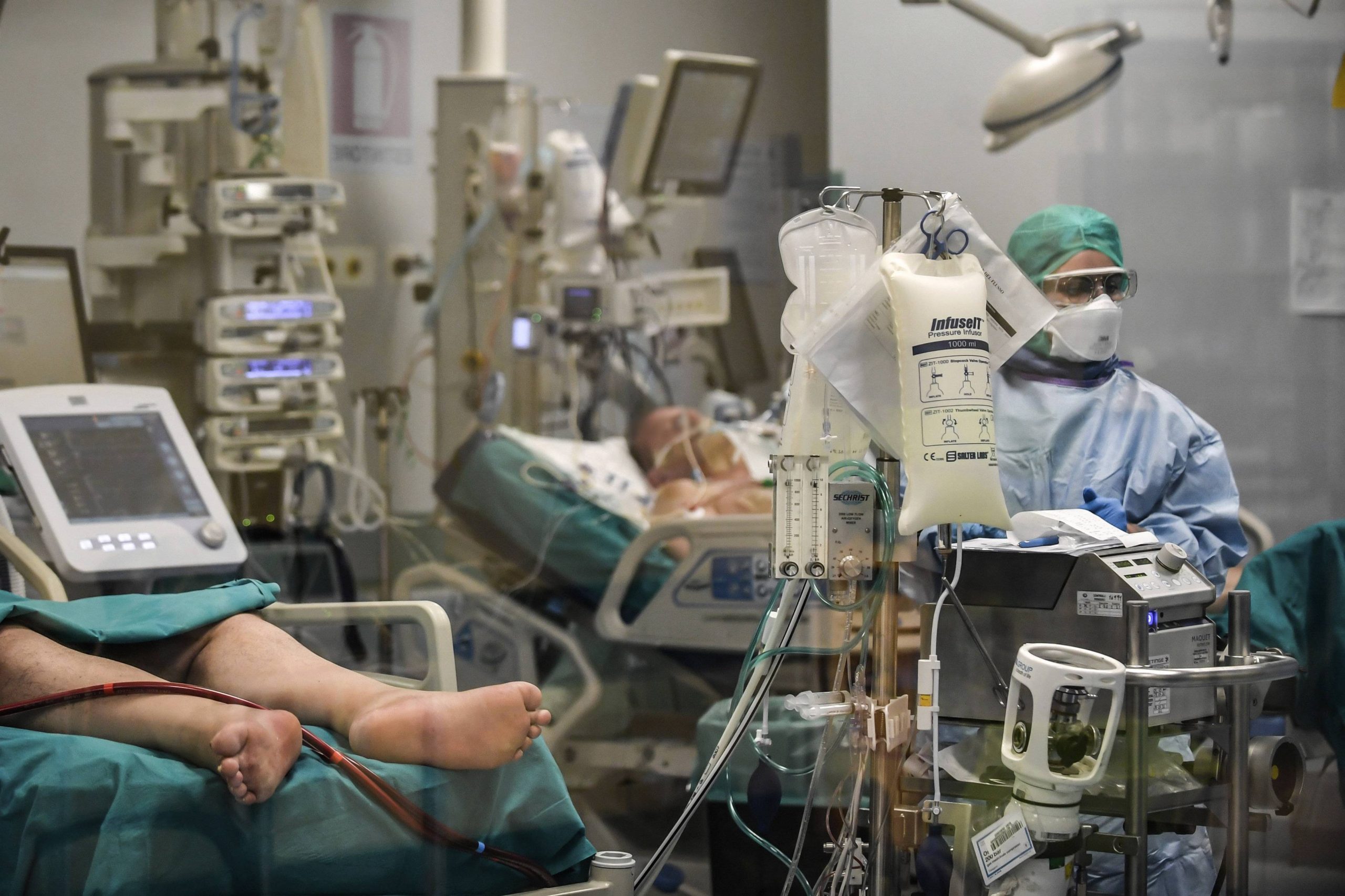
101-year-old Italian man released from hospital after recovering from coronavirus
(CNN) — A 101-year-old man has been released from hospital after recovering from the novel coronavirus, Gloria Lisi, the deputy mayor of the Italian city of Rimini, has said.
The man, who has been named only as “Mr P,” was admitted to hospital in Rimini, northeast Italy, last week after testing positive for COVID-19 and left the hospital on Thursday.
Lisi said his “truly extraordinary” recovery gave “hope for the future.”
“Mr P made it. The family brought him home yesterday evening. To teach us that even at 101 years the future is not written,” she said.
Mr. P was born in 1919, during the Spanish flu pandemic, which is estimated to have killed between 30 million and 50 million people worldwide.
Rimini had registered 1,189 cases of coronavirus as of Thursday, according to the Italian Civil Protection Department.
Authorities in 197 countries and territories have reported more than 549,000 novel coronavirus cases worldwide since China reported its first cases in December.
Italy has been particularly badly hit, with more deaths than any other country.
According to figures from Johns Hopkins University, there have been 80,589 confirmed cases of coronavirus in Italy and 8,215 deaths.
The-CNN-Wire
Photo Credit: globalnews.ca