

DOE keeping secret a full list of schools with COVID-infected teachers
While trying to bolster confidence in the planned school reopening, the city Department of Education won’t reveal a full list of schools where teachers who returned to work last week have tested positive for COVID-19.
The DOE also would not say whether parents or guardians at the affected schools would be notified.
As the number of teachers who test positive grew — at least 24 as of Friday — some co-workers say they were not notified or contacted by city disease detectives when staffers reported the infections.
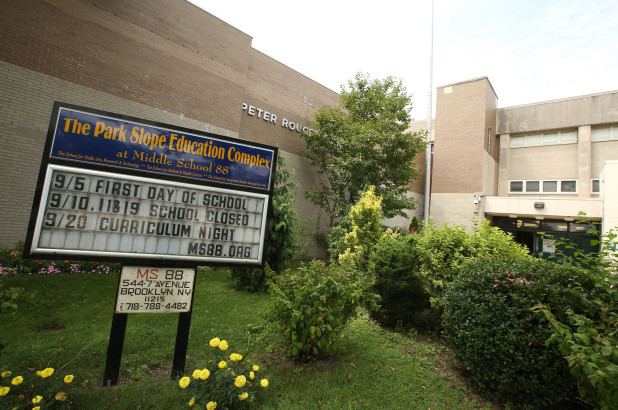
Lynn Shon, a teacher at MS 88 in Brooklyn, tweeted Saturday that she and fellow staffers heard for the first time that morning from the city’s Test & Trace program — four days after being exposed to a colleague who tested positive for COVID.
“It’s unacceptable the lag between when we were exposed and when we were directly contacted by the city,” Shon told The Post.
A Bronx teacher told The Post she learned only by asking around that a teacher at a school in her building, PS 168, had tested positive. She saw staffers at that school leaving early on Thursday, but the school was open Friday.
“No notice went out. They are trying to hide it, going about business as usual,’ the teacher said.
Nequan McLean, a dad and president of Community Education Council 16 in Bedford-Stuyvesant, said he learned Thursday that a teacher at MS 267 had tested positive.
“There has been no official notification given out at the school. Everyone is back today,” he said Friday.
The parent advisory group voted 8-0 during an emergency meeting Thursday night to “take legal action” to stop the DOE from opening District 16 schools because officials did not turn over reports on ventilation and other building conditions. The group has retained a lawyer.
“We don’t feel like our schools are safe.” McLean said after the meeting. “The gloves are off. They’re telling too many lies.”
The DOE said Friday it has confirmed 19 teachers at 18 schools have tested positive for COVID. One school, P.S. 811X, was closed on Friday for at least 24 hours, because it had two confirmed COVID cases in different classrooms.
The COVID-infected teachers started reporting to schools citywide last Tuesday before getting their test results, which were supposed to be “expedited.” About 15,000 teachers had themselves tested voluntarily, the DOE said.
The DOE refused to disclose how many school staffers exposed to the infected teachers have now been sent home to quarantine for 14 days.
“The mayor is saying nobody needs to know about these cases, which is pretty crazy,” said teacher Liat Olenick. “If I were a parent, I would definitely want to know.
Olenick is active in MORE-UFT, an activist faction of the teachers’ union, which tweeted a list of 22 schools where teachers reported confirmed cases. The list did not include MS 267 in Brooklyn, which McLean had identified as having a teacher testing positive.
Schools are set to open for students on Sept. 21. Beginning Oct. 1, under an agreement between the city and labor unions, all schools will have mandatory random testing of 10 percent of staff and students.
he plan already has some parents worried about the nasal swabbing — a procedure that can be uncomfortable — being done on their children without them being present. Kids whose parents don’t give permission will have to learn remotely, officials say.
Also in October, the DOE will launch the city’s “Situation Room,” described as a “rapid response team” with members of the city Health Department and the Test & Trace Corps aimed at detecting and curbing spread of COVID.
The Health Department failed to conduct such testing and tracing in March, when numerous teachers were likely infected before Mayor de Blasio finally agreed to close the schools. Nearly 100 school staffers have since died from the virus.
via: https://nypost.com/2020/09/12/doe-hiding-a-full-list-of-schools-with-covid-infected-teachers/
Photo Credit: Angel Chevrestt
Westchester school under fire for cartoon comparing cops to KKK, slave owners
A Westchester County high-school teacher kicked off his first day of classes by handing out an image on the Black Lives Matter movement — comparing modern-day cops to slave owners and the Ku Klux Klan.
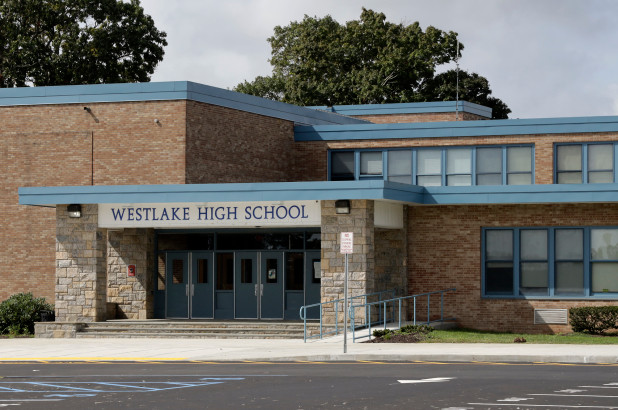
Westlake HS educator Christoper Moreno gave his 11th-graders a handout Sept. 8 which included a five-frame cartoon panel.
The first three frames show slave owners and a member of the KKK with their knees on the backs of black men in shackles. The KKK member also has a noose around the black man’s neck.
The last two panels depict a sheriff and a police officer each with their knees on the neck of a black man in handcuffs. The black man is saying, “I can’t breath’’ — what black Minneapolis victim George Floyd gasped as his neck was knelt on by white cop Derek Chauvin, sparking ongoing BLM protests across the country.
“My daughter showed me the paper. I said, `What is this?! You’ve got to be kidding me!’ ” said Westlake mom Ania Paternostro. “This cartoon compares the police to the KKK. It’s an attack on the police.”
The mother said she immediately fired off letters of protest to Mount Pleasant School District Superintendent Kurt Kotes and Westlake Principal Keith Schenker, whose school is in the district.
“Enough is enough,” Paternostro told The Post.
“This cartoon is disturbing. We have to respect the men in blue who protect us,” added the mom of two, a native of Poland.
“We don’t need a teacher brainwashing my kids. I’ll teach my kids about what’s right and what’s wrong.”
Her daughter Nicole said she was troubled by Moreno’s lesson plan because she considered it one-sided and anti-police, too.
“The cartoon was disgusting,’’ the teen said. “It compared the police with all the terrible people in history. It was not fair. It wasn’t right.’’
Nicole said she has been bullied on social media over the past few days and called a racist for blowing the whistle on the controversial lesson plan.
Moreno did not respond to e-mail and phone requests for comment.

Kotes and Schenker declined comment — although the superintendent sent a letter to Paternostro and the parents of other kids in the class promising an “investigation’’ into the lesson plan.
“I want to address an issue that I have recently been advised is of deep concern to many members of our community,’’ Kotes wrote in his letter.
“Specifically, I have been advised that one of our High School teachers may have recently conducted a lesson that many have deemed to be highly controversial in the current climate.
“I want to assure the community that the District will be conducting a thorough investigation to determine what exactly occurred in this particular classroom and what, if any, action is to be taken under the circumstances to appropriately address the matter,’’ he said.
“Once the investigation has been completed we will follow up with the community to the extent necessary and legally appropriate.”
Either way, the lesson did not sit well with members of Westlake’s law-enforcement community.
“It’s a smack in the face to law enforcement, it’s an absolutely a smear of the police,” Steve Kardian, a retired Mt. Pleasant police officer and former New York city Department of Investigations prober, to The Post of the cartoon.
Former Westchester County Executive Rob Astorino, a Republican running for state senate in the district, added, “Parents don’t send their children to school to learn to hate America and our police.
“Our schools should be a place for the open exchange of ideas, not political indoctrination. The false narratives and brainwashing has to stop.”
The controversy comes just weeks after the Wylie Independent School District in Texas pulled an online assignment — which featured the same cartoon — given to eighth graders.
Texas Gov. Gregg Abbott called for the teacher who assigned the lesson to be fired.
via: https://nypost.com/2020/09/13/school-under-fire-for-lesson-comparing-cops-to-kkk-slave-owners/
Photo Credit: Kevin C. Downs

Texas man writes names of 1,400 Black people killed by police on his car
(KEYE/CNN/Meredith) — A man from Texas is using his car to bring awareness to the Black Lives Matter movement.
Jeremiah Hindberg said he used a database to research African Americans who have died at the hands of the police in the US.
He found 1,400 names.
“A lot of sadness. I cried in my garage for hours,” Hindberg said.
The 20-year-old hopes his car will start conversations that might be uncomfortable for some.
It took him several days to write the names of 1,400 black Americans. He wrote the names of George Floyd and Breonna Taylor on the hood of the vehicle.
“This is my representation of BLM,” he told KEYE News.
What Hindberg witnessed and experienced while at a protest in May lead him to turn his car into a symbol of the Black Lives Matter movement.
Hindberg and his father were medics helping bring injured protesters to aid.
His father was shot in the arm and is still recovering from nerve damage today.
“It changed who my dad was fundamentally, as a person,” Hindberg said.
As a food delivery driver, reaction to the car ranges from being cursed out to more moments of gratitude.
“She just looked at me in the eye and said thank you so much. She started to tear up and cry,” he said of a woman admiring his car.
Hindberg says it’s those moments that remind him of why he wrote the names of all those men, women and children.
“Somebody knows that they’re cared for. They’re not just another number, they’re not just another person,” he said.
Photo Credit: kmov.com
Florida man beats, spits on elderly man who asked to socially distance
A maskless Florida man punched and spat on a 70-year-old man at a convenience store last week after being asked to social distance, authorities said.
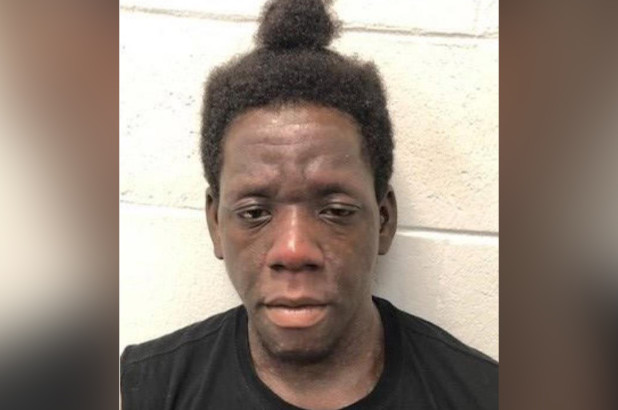
The victim, who was not identified, asked Rovester Ingram to step away while they were inside the store at a Citgo gas station on Thursday because Ingram was not wearing a mask, Winter Park Police said in a statement.
Ingram followed the victim outside the store and started punching him in the face, police said. The victim went back into the store to get away, but Ingram followed him and continued his attack.
After shoving the victim to the ground, Ingram grabbed the man’s hair and pulled him outside the store, over the sidewalk, and into a parking space where he continued to beat the man, according to police.
“The victim was on his stomach as Ingram repeatedly punched him on his back, then spat on him and kicked him in the head before walking away,” police said.
Surveillance footage obtained by FOX35 Orlando captured the brutal attack.
Police were called and found the victim bleeding outside the business. He was rushed to a hospital with serious injuries, including broken bones.
Ingram was identified on the surveillance footage and arrested at his home without incident, police said.
He faces charges of aggravated battery on a person over 65 years old and kidnapping.
via: https://nypost.com/2020/09/13/florida-man-beats-spits-on-man-who-asked-to-social-distance/
Photo Credit: Winter Park Police Department
Anti-police protesters chant “We hope they die” outside LA hospital where two deputies were fighting for their lives
Anti-police protesters descended on a Los Angeles hospital where two deputies were fighting for their lives after being ambushed and shot in the head — chanting, “we hope they die,” according to officials.
The sick chants came outside as the two rookie officers — one a 31-year-old mother of a six year-old boy — were still fighting for their lives after being “critically injured” as they sat in their patrol car in the caught-on-camera ambush in Compton.
“To the protesters blocking the entrance & exit of the HOSPITAL EMERGENCY ROOM yelling ‘We hope they die’ referring to 2 LA Sheriff’s ambushed today in #Compton: DO NOT BLOCK EMERGENCY ENTRIES & EXITS TO THE HOSPITAL,” Los Angeles County Sheriff’s Department tweeted early Sunday.
“People’s lives are at stake when ambulances can’t get through.”
Officers branded the protest an unlawful assembly, and arrested two people who refused to move — including a reporter without credentials who “ran towards the deputies, ignored repeated commands to stay back” and “interfered with the arrest,” the department said.
LAist identified the reporter as its own Josie Huang, who said she was released early Sunday and would address the sheriff’s office claims soon.
The ambushed cops were not named, but were revealed to be officers who had served just over a year in the department. One was a 31-year-old female officer, the other a 24-year-old male, the Los Angeles Times said.
They were “ambushed by a gunman in a cowardly fashion,” Sheriff Alex Villanueva said at a press conference, calling it “a somber reminder that this is a dangerous job.”
“Every week across the nation someone is losing their life in the line of duty,” he said. “This is just another grim reminder of that.”
Assemblyman Reggie Jones-Sawyer caught it an “unprovoked cowardly act.”
“We must come together and pray for the officers because they are heroes,” he said at the same press conference.
LAPD Chief Michael Moore tweeted his prayers that the “two guardians” survive.
“I recognize and acknowledge we live in troubled times. But we must as a community work thru our differences while loudly and resoundly condemn violence,” he tweeted. “Blessed are the Peacemakers.”
The FBI is assisting in the investigation. There have yet to be any arrests and it was not immediately clear if any suspects have been identified, the L.A. Times said.
via: https://nypost.com/2020/09/13/la-hospital-treating-deputies-inundated-by-protesters/
Photo Credit:
How mass incarceration became ‘a business opportunity’ in America
Mass incarceration in the U.S. grew over decades as more politicians with tough-on-crime stances became elected to office and laws changed surrounding sentencing.
In that environment, the private prison industry became a place to generate a lot of revenue.
“A lot of these criminal laws were changed with the political support of individuals who supported the private prison corporation because they saw a business opportunity,” Amy Fettig, executive director at The Sentencing Project, told Yahoo Finance’s Illegal Tender podcast. “They saw the incarceration, the denial of freedom of our fellow Americans, people in our community as a business opportunity.”
The U.S. has the most private prisons in the world. According to The Sentencing Project, there were over 128,000 people incarcerated in private prisons in 2016, which accounted for roughly 8.5% of the prison population. In 2017, the private prison industry generated an estimated $3.9 in revenue.
“The for-profit prison industry is a multi-billion dollar corporate effort to run private prisons not only in the United States, but throughout the world,” Brandon Buskey, deputy director of Smart Litigation at the American Civil Liberties Union (ACLU), told Yahoo Finance. “And it depends for its survival on our dependence on mass incarceration.”
‘A bag of chips is going to cost you a lot of money’
Private prisons have been around since the 1800s and accelerated after the Civil War.
They truly began to pick up steam in the 1980s on the business model of Corporate Corrections of America, now known as CoreCivic (CXW), gained traction.
“Very quickly after the formation of private prisons in the 1980s, we also saw the dramatic expansion of the War on Drugs, mandatory minimums, and so, the private prison industry has essentially grown up with the trend in mass incarceration in our country over the past several generations,” Buskey explained.
In 1971, President Richard Nixon declared a “War on Drugs,” and rates of incarceration in America increased for the next 40 years.
“What we saw with the War on Drugs is that resources that could have gone into community treatment, which is far more effective and far cheaper, were diverted into building prisons and warehousing more and more people,” Fettig said. “Private prison corporations benefited from that, as did all the collateral industries that make money off of our collateral state, from the phone companies, to the companies that sell commissary.”
She added that “a bag of chips in prison, which is highly prized because the food is so terrible and nobody has access, a bag of chips is going to cost you a lot of money and somebody makes money off of that. It’s a corporation.”
So how exactly do these private prisons make a profit?
The argument for many in support of for-profit prisons is that they are cost effective, at least in comparison to federal prisons. The average annual cost of incarceration for those federally imprisoned was $36,299.25 in 2017, which comes out to $99.45 per day, a 4.6% increase from 2016, according to the Federal Register.
But according to Lauren-Brooke Eisen, who directs the Justice Program at NYU School of Law’s Brennan Center for Justice, it’s “very difficult” to compare public and private prisons in terms of cost savings.
“It’s difficult to vet whether that claim is actually true and the way costs are calculated on a public budgeting document and for a private company vary widely and are not easily comparable,” Eisen said.
Buskey explained how the business plan of a for-profit prison actually works.
“The prison will approach a state or locality and say, ‘We will take over the operation of a prison in exchange for you keeping the prison at certain levels of occupancy,’” he said. “And in the course of doing that, the private prison, the private company, then takes over all operations from the state.”
The appeal for government officials is that “instead of the state having to spend money on its own corrections officers, on its own medical care, the private prison now will take all that over,” Buskey said. “And in using these occupancy rates, what the prison is doing is saying, “You have to still pay us an overhead for the number of people who are housed here, but in the course of that, you’ll still see savings because we can operate the prison more efficiently.”
The number of people imprisoned at for-profit facilities has increased by 39.3% since 2000, according to The Sentencing Project, while the overall prison population in that time has increased by just 7.8%. The population of private prisons has more than doubled in six states during that time: Arizona (479%), Indiana (310%), Ohio (277%), Florida (199%), Tennessee (117%), and Georgia (110%).
“Often the private prison trying to incentivize the state to sign the contract will offer a kickback to the state and say, “If you extend the contract by five years or 10 years, we will pay you, say, 10 million, $30 million for the privilege of signing that contract,” knowing that the private prisons stands to gain tens of hundreds of millions of dollars through operating the prison for the state,” Buskey said.
New Mexico and Montana have the highest share of private prisons in the U.S., followed by Oklahoma, Tennessee, New Mexico, and Hawaii.
“These are often states that have attempted to address budget concerns by increasing privatization,” Buskey said. “It’s a common model that we’ve seen throughout criminal justice reform where the pitch by often conservative lawmakers is to save money and operate the system more efficiently. And that is a recipe for inviting private prisons to come in with an appeal that they can run the prisons for far less money and save the state thereby a number of millions of dollars in doing so.”
‘Harder to dismantle mass incarceration’ with private prison industry
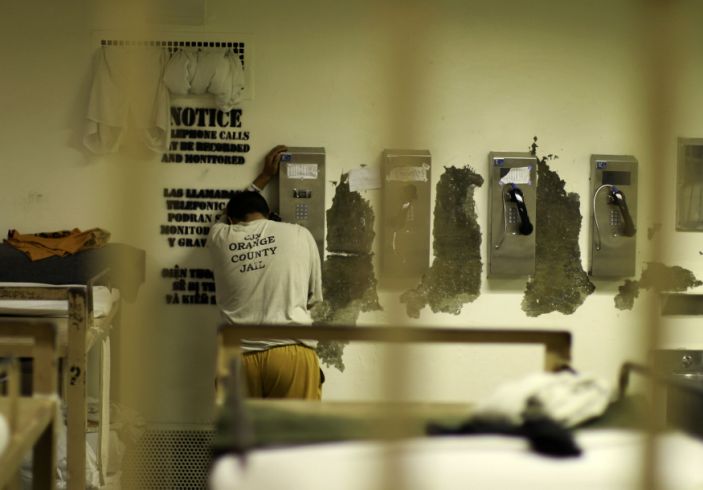
Ultimately, since private prisons are inherently built for maximizing profit, incarcerated individuals are often charged high fees for basic services like making a phone call and necessities like tampons.
“The industry has been criticized truly for as long as it’s existed, and the reason for that is because some argue private prisons create perverse incentives that drive overcrowding by cutting costs and reducing the quality of life for the incarcerated individuals in those facilities or that private prisons earn more revenue when incarcerated individuals serve longer sentences,” Eisen said.
“In order for these companies to make money,” she added, “they are incentivized to cut costs and find efficiencies. And the industry looks for efficiencies that government officials who are tremendously hamstrung by stringent procurement laws and union contracts can’t take advantage of.”
Fettig noted the privatization of medical care in these facilities has created major problems.
“That didn’t used to be an issue in this country,” she said. “The state used to run medical care in prisons and jails and counties did as well. But now, it’s a privatized business that makes money off of the fact that we have a mass incarceration system that doesn’t treat people in the community, that doesn’t provide a social safety net in the community.”
At the end of the day, “we would have mass incarceration with or without the private prison industry,” Eisen said. “But something that’s really important to note is that the industry does make it harder to dismantle mass incarceration.”
Adriana is a reporter and editor covering politics and health care policy for Yahoo Finance. Follow her on Twitter @adrianambells.
via: https://currently.att.yahoo.com/finance/news/mass-incarceration-business-america-170130832.html
Photo Credit: REUTERS/Lucy Nicholson

Netflix defends ‘Cuties’ amid ‘cancel’ backlash, tells haters to actually watch film
The French film “Cuties,” or “Mignonnes,” tells the story of an 11-year-old Muslim girl who becomes involved in a dance crew despite her family’s conservative traditions — but the movie has become hugely controversial for its perceived sexualization of little girls.
More than 610,000 people have signed a Change.org petition demanding Netflix subscribers cancel their subscriptions to protest the company’s decision to stream the film beginning Sept. 9.
Despite the public outcry, including the #CancelNetflix Twitter trend, the streaming giant is standing by the movie, recommending that critics actually watch it before condemning it.
“ ’Cuties’ is a social commentary against the sexualization of young children,” a Netflix spokesperson told The Post. “It’s an award-winning film and a powerful story about the pressure young girls face on social media and from society more generally growing up — and we’d encourage anyone who cares about these important issues to watch the movie.”
The movie’s writer and director, Maïmouna Doucouré — who, like the film’s main character, Amy, is Senegalese — spent a year researching the film, interviewing local children in the area the movie is set in about their behavior and motives.
Still, many social media users have said they find any portrayal of child sexualization abominable.
“When you call a movie ‘Cuties’ and promote it like this: That’s sexualizing 11yr old kids,” wrote @iDavid76. “Shame on you, @Netflix.”
Doucouré said she’s received harsh criticism online and even gotten some death threats, leading Netflix co-CEO Ted Sarandos to call her directly to apologize.
“I received numerous attacks on my character from people who had not seen the film, who thought I was actually making a film that was apologetic about hypersexualization of children,” she told Deadline. “I also received numerous death threats.”
Others believe the film to have merit but that Netflix just advertised it poorly. “So… Netflix bought Maïmouna Doucouré’s MIGNONNES, gave it a misleading poster and summary, and now people are review-bombing it sight unseen on IMDb and Google and petitioning for it to be removed?” tweeted Vulture film critic Alison Willmore.
Film critic Richard Brody argued in The New Yorker that haters have wholly missed the point of the film, which in fact critiques the structures which lead to child sexualization.
“The subject of ‘Cuties’ isn’t twerking; it’s children, especially poor and nonwhite children, who are deprived of the resources — the education, the emotional support, the open family discussion — to put sexualized media and pop culture into perspective,” he wrote, noting that he doubts many of the “scandal-mongers” have actually seen the film they are so passionately against.
“Cuties” does not celebrate children behaving sexually, he argued, but rather “it dramatizes the difficulties of growing up female in a sexualized and commercialized media culture.”
Photo Credit: en.buradabiliyorum.com/
Florida man charged with impersonating an officer after allegedly pulling over off-duty Orlando cop
A Florida man accused of impersonating a police officer wound up in handcuffs himself this week, accused of pulling over an off-duty Orlando cop in March, local reports said.
The 40-year-old Omar Forde allegedly told investigators he was on his way home from his security guard job when he saw another car he thought was swerving with an impaired driver, according to Orlando-based WKMG-TV.
“The gentleman flew past me, and his car danced,” Forde said in a conversation recorded with a Casselberry police officer’s bodycam. “So I thought he might have been intoxicated.”
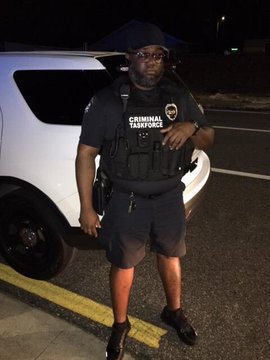
Forde’s company, he told police, is named “Criminal Task Force,” the outlet reported. That name was on his vest, and he wore a badge, a gun and a Taser, authorities said.
“A citizen would mistake this all day for a law enforcement officer,” one of the Casselberry cops told Forde in the video, referring to his white SUV, uniform and other accouterments.
Forde reportedly told police he pulled alongside the off-duty officer’s blue BMW to say something. Then, when the BMW driver asked if he was being pulled over, Forde told authorities he told the man to slow down.
But the officer then got behind Forde’s car, flashed his own lights and they stopped together farther down the road, according to local reports.
The officer, identified by Orlando-based WFTV as Zachary Price, called 911.
“When [Forde] tried to stop [the officer], he could look over and see,” Casselberry police Capt. William Nas said in a news conference. “And since he’s a policeman himself, he knows about the uniforms and jurisdictions, and he knew it wasn’t a Casselberry or Seminole County or [state] trooper, so he called us right away to get this person stopped and questioned.”
Casselberry police arrived and said they found Forde did not have a valid driver’s license, according to local reports.
He was charged with impersonating an officer, driving with a suspended license, and has been released after posting a bond.
Forde has denied having tried to impersonate an officer.
via: https://www.foxnews.com/us/florida-man-charged-impersonating-officer-pulling-over-orlando-cop
Photo Credit: twitter

MMA legend Conor McGregor facing attempted sexual assault, indecent exposure charges
Mixed martial arts legend Conor McGregor was held in police custody and questioned in Corsica on Thursday after he was accused of attempted sexual assault and indecent exposure, prosecutors said.
“Following a complaint filed on September 10 denouncing facts likely to be qualified as attempted sexual assault and indecent exposure, Conor Anthony McGregor was the subject of a hearing … under the custody regime,” according to a statement from the prosecutor’s office in Bastia.
The statement provided no other details about the alleged offenses.
McGregor, 32, denies the charges.
“Conor McGregor vigorously denies any accusations of misconduct. He has been interviewed and released,” he told The Post through a spokesman, who added the brawler was interviewed by police and later released.
His manager also came out swinging on his behalf.
“I am irate and putting out a warning loud and clear: Conor McGregor is not and will not be a target for those seeking to score a headline or a payday,” Audie Attar said in an e-mail to The Post.
The Irishman, whose nickname is “Notorious” returned to the Octagon early this year after completing court-ordered community service for a bus of rival MMA fighters leaving Brooklyn’s Barclays Center in 2018. He also faced a civil suit in Miami after his arrested for destroying a fan’s cell phone.
He announced his third retirement from the sport in June.
The former Ultimate Fighting Championship star is reportedly vacationing on the French island with fiancee Dee Devlin and their two children.
via: https://nypost.com/2020/09/12/conor-mcgregor-facing-sexual-assault-indecent-exposure-charges/
Photo Credit: nypost.com/Zuffa LLC

Graduate sues over 4 year degree that is “worthless”
A former student at the now-defunct ITT Technical Institute and his mother are suing student loan giant Navient (NAVI) over the company’s refusal to cancel his private student loans despite the U.S. government erasing thousands of federal student loans related to the notorious for-profit school.
The case could set a precedent for defrauded borrowers seeking relief from privately-held loans (as opposed to federally-backed loans).
“In filing this case, and expanding the discussion about private student loan cancellation, it sends a clear message to Navient and other private lenders that they can’t continue to deny students’ rights while profiting off of their debt,” Victoria Roytenberg, senior attorney at the Project on Predatory Student Lending and a lawyer for the plaintiffs, told Yahoo Finance. “All students should have the right to the cancellation and shouldn’t be stuck with that bogus debt.”
Navient declined a request for comment.
‘I have a four-year degree that is worthless’
Jorge Villalba, who attended an ITT school in California for a bachelor’s degree in digital entertainment and game design in 2006, borrowed over $50,000 in federal student loans and $43,000 in private loans (that were co-signed by his mother). ITT shut down all campuses in 2016, affecting roughly an estimated 35,000 students, amid lawsuits and investigations over alleged predatory lending practices.
“I didn’t get a good education — I have a four-year degree that is worthless,” Villalba told Yahoo Finance in an interview. “When I was trying to apply for jobs, I couldn’t get jobs because people didn’t want students from that school. They’d see the diploma from the school, and go: ‘It’s okay, thank you.’ … There should be something where the government can help you out and say, ‘Let’s get this loan discharged because they committed fraud.’”
Villalba filed for a borrower defense to repayment, seeking forgiveness on his federal student loans. The Education Department canceled that debt in December 2017. Navient refused to do the same for his private loans. The lawsuit argues that the loans are legally unenforceable given the underlying ITT fraud.
“There’s a long line of law that says the entity that’s financing a good can be liable for the underlying good, and that’s basically what’s happening here,” Mike Pierce, policy director and managing counsel at the nonprofit Student Borrower Protection Center, told Yahoo Finance. “You have a product, which is an education at a for profit college that is being sold — and financed — in commerce, and that product being sold to a consumer is fraud …. it’s not a crazy idea by any stretch of the imagination — it’s something that’s deeply rooted in decades of law.”
After Villalba’s federal loans were discharged in 2018 due to widespread misconduct at the for-profit chain, in November, his lawyers had written to Navient asking the company to “recognize that the private student loans were unenforceable” and to stop collecting on the debt.
Navient rejected the argument. The lawsuit asserts that the student loan giant first argued that the Villalbas didn’t have the right to cancellation before arguing that they didn’t satisfy the requirements to have his debt canceled. They then argued that he should go to the federal government about this matter.
“The ultimate goal is a court order compelling the rescission of these loans,” Pierce said about the lawsuit, noting that there is still a question of whether Navient will come to a settlement or fight the case. In any case, he added, “for the first time in decades we can actually see a path” for defrauded borrowers seeking relief from privately-held loans.
There is some precedent for private debt linked to ITT being discharged: For instance, $168 million worth of ITT loans students took out, managed by Student CU Connect CUSO, were erased last year in a settlement between the Consumer Financial Protection Bureau, 44 states, and Washington D.C. (ITT settled a separate lawsuit in 2017, which erased nearly $600 million owed by roughly 750,000 former students – including Villalba — related to “temporary credits” provided by the school.)
Though the Navient loans are private loans that are not directly linked to ITT, Pierce noted that Navient’s predecessor, Sallie Mae, not only issued federally guaranteed loans to borrowers for accredited schools but also worked directly with schools to issue private student loans when the students ran out of federal financial aid.
And in 2017, the Illinois Attorney General sued Navient and Sallie Mae, alleging that there were “widespread abuses across all aspects of its business” and that “Sallie Mae began peddling risky and expensive subprime loans to student loan borrowers as loss leaders in order to dramatically boost its student loan portfolio with schools across the country.”
Though Villalba’s experience focused more on the issue of fraud at the school rather than the loan servicer itself, Pierce also believed the lawsuit ties these two themes together and that the borrower should be entitled to discharge given both instances.
“Everyone knew full well that these loans were made on shaky ground, to put it as charitably as possible,” Pierce said, adding that since “we know the school engaged in fraud, we don’t have to work so hard to knock the legs out from underneath the loans themselves because we have this robust body of evidence that shows that the schools themselves were engaged in fraud.”
Villalba detailed how Navient “would call me at work when they didn’t have my work number” while attempting to recoup the debt. He added that the company reached out to members of his family, even those who “had nothing to do with the school or any loans.” His mom, Alicia Villalba, who co-signed on the loans, also received calls.
“They were asking her for money, they wanted to garnish whatever money she was making,” he said. “From 2010 until today, it has just been horrible.”
In a statement, Alicia Villalba said that the situation severely damaged her credit.
“The credit I worked really hard to get is completely ruined,” she stated. “I cannot even get a credit card of my own, my husband has to have all the finances in his name. It is a lot of stress and worry for the whole family.”
The lawsuit noted that the credit reports for both Jorge and Alicia Villalba contained entries from Navient stating they were 60-90 days past due on their private loans but “do not reflect Plaintiffs’ dispute of the enforceability of their private student loans.”
Photo Credit: currently.att.yahoo.com