


When a Waffle House was short on staff, customers jumped behind the counter to help out
Late last Saturday night, Ethan Crispo had just left a friend’s birthday party in Birmingham, Alabama, and walked into a Waffle House around midnight to grab a bite.
Crispo told CNN only a single employee was working in the restaurant.
He described the cook’s face, as “awash in bewilderment,” at finding he was by himself managing the night shift.
More than 30 people were there eating, and there was just one man left to “fend off the incoming crowd of hungry, heavily imbibed customers,” Crispo said.
He became resigned to going home on an empty stomach.
But a customer finished his meal, asked for an apron and stepped behind the counter to wash dishes.
“It was a smooth transition,” Crispo, 24, said. “He just busted his butt and helped out.”
‘It was one of my most memorable experiences’
Crispo said he asked Ben, the lone associate working, who the man washing dishes was.
Turns out he didn’t work at the restaurant, nor did he work at a Waffle House anywhere.
Another woman, wearing a dress and heels, also stepped up. She walked behind the counter to get a coffee pot.
“At first I thought it was out of necessity, like she just wanted coffee,” Crispo said. But she was enlisting as a second member of the volunteer staff.
The two worked together in a team, busing tables, stacking cups and washing dishes. Meanwhile, Ben, the actual employee, manned the cash register and cooked at the grill.
The man washing dishes occasionally “had to ask Ben where stuff should go,” Crispo said, but otherwise it was as though though two strangers, without even talking to each other, had spontaneously learned to run a restaurant in tandem.
Pat Warner, a spokesman for Waffle House, told CNN the store had a miscommunication about the duty roster that night, and it had created “a little gap” in staffing.
“We’re very appreciative and thankful, but we do prefer to have our associates behind the counter,” Warner said.
He added that Waffle House restaurants tend to have a special sense of community. He recalled a similar time in 2014 when diners volunteered to keep a restaurant running when paid staff couldn’t get to work during Atlanta’s notorious Snowmageddon storm.
But, for Crispo it was the first time, and it’ll stick out to him for years to come, as an example of humanity at its best.
“I’ve never seen anything like this ever happen, nor will I again, probably,” Crispo said. “It was one of my most memorable experiences.”
Photo Credit: Courtesy Ethan Crispo

New York woman arrested for allegedly harassing 2-year-old with genetic disorder
A New York woman has been arrested for allegedly harassing a child with a genetic disorder, according to police.
Krista Sewell, 26, of Melville, allegedly posted messages threatening the child, who has a “severe genetic disorder that affects the skin” on Facebook, Instagram and a GoFundMe campaign benefiting the child’s family, according to a press release by New York State Police.
The Long Island woman also allegedly mailed threatening letters to the child’s home, police said.
The 2-year-old girl, Anna Riley, lives in Ulster County in the Hudson Valley and suffers from harlequin ichthyosis, which causes skin abnormalities that affect breathing and movement. Her mother, Jennie Riley, is outspoken on social media about the condition in an effort to educate people, The Associated Press reported.
Riley said her daughter was born with the “severe” condition and that she has “made a choice to educate people publicly on Facebook and Instagram,” according to AP.
On Sunday, after the news of Sewell’s arrest became public, Riley wrote on Instagram that she refuses for her daughter “to hide from her disorder with some sort of shame about having different skin.”
“One day she will have to go out on her own to face the world and I will do everything in my power to make sure she has the confidence that is needed,” Riley wrote. “I hope so much that people learn there is someone on the other side of their keyboards and it’s not ok to send hateful messages.”
Riley thanked authorities for their “diligence and dedication” as well as their compassion in investigating the case.
“Although I knew there was a possibility for negativity I never expected to receive the messages that were sent to me,” Riley said in a statement. “Over the past year I have fought a battle I never thought I would fight and I felt fear no mother should feel.”
Sewell was charged with aggravated harassment, stalking, and a hate crime with aggravated harassment, police said. She was still being housed in the Ulster County Jail as of Sunday, a representative for the jail told ABC News. It is unclear if she has retained an attorney.
Photo Credit: Ulster County Sheriff’s Office

Hospital seizes wages from patients working at Wal-Mart for unpaid medical bills
WISE, Va. — When a judge hears civil cases at the courthouse in this southwest Virginia town two days a month, many of the lawsuits have a common plaintiff: the local hospital, Ballad Health, suing patients over unpaid medical bills.
On a Thursday in August, 102 of the 160 cases on the docket were brought by Ballad. Among the defendants were a schoolteacher, a correctional officer, a stay-at-home mother and even a Ballad employee — all of whom had private insurance but were still responsible for a large share of their bill, the result of large deductibles and copayments.
Ballad, which operates the only hospital in Wise County and 20 others in Virginia and Tennessee, filed more than 6,700 medical debt lawsuits against patients last year. Ballad’s hospitals have brought at least 44,000 lawsuits since 2009, typically increasing the volume each year.
In nearly all such cases, the hospitals prevail. Only about a dozen patients showed up for the August court date in Wise, hoping to work out a payment plan or contest the claims.
“There is this new group of people who, on paper, look like they should be able to afford their bills,” said Craig Antico, founder of the nonprofit RIP Medical Debt, which buys and forgives outstanding bills. “They’re middle-class; they have relatively good credit ratings; they’re not transient. But they have these big deductibles, and they can’t afford their bills.”
From Delaware to Oregon, hospitals across the country are increasingly suing patients for unpaid bills, a step many institutions were long unwilling to take.
In some places, major hospitals now file hundreds or even thousands of lawsuits annually. Those cases strain court systems and often end in wage garnishments for patients.
In Milwaukee, for example, a nonprofit children’s hospital has sued 1,101 patients since the beginning of 2018 — more cases than it brought in the entire previous decade. The city’s only top-level trauma center filed 2,074 suits last year, more than double the prior year’s number.
And some of the country’s most prominent academic hospitals, including Johns Hopkins in Baltimore and NewYork-Presbyterian, also have sued more patients in recent years.
The hospitals say that they are turning to the courts more frequently as deductibles rise and patients owe more but that this practice affects a small fraction of their patients. They defend the suits as necessary to recouping outstanding bills and keeping health systems afloat. “We’re only pursuing patients who have the means to pay but choose not to pay,” said Anthony Keck, vice president for system innovation at Ballad Health.
But patient and consumer advocates say hospitals are making faulty assumptions about insured patients’ ability to pay. They also argue that the lawsuits and wage garnishments hit middle- and low-income populations, who struggle to keep up with the lost income. A cashier at a Providence Health hospital in Oregon reported having wages garnished for outstanding medical debt to her own employer. For one paycheck for 80 hours of work, she took home 54 cents after a garnishment and other deductions.
Wage seizures have led patients to sign up for public assistance programs, fall behind on bills, give up their insurance and take on credit card debt, according to interviews.
“I know I owe it, which is fine, and of course I want to pay it,” said Amanda Sturgill, 41, whom Ballad took to court. “It just seems like they want their money no matter what my situation is.”
Sturgill earns $12.70 an hour and gets health benefits working full time as an order processor for an audio equipment manufacturer. She is going through a divorce and supports four children.
Ballad sued her in June over $2,498 in outstanding debt for her teenage daughter’s back surgery. Sturgill set up a $150-a-month payment plan but often struggles to come up with the money.
“Sometimes, if I’m getting close to the payment date and don’t have the money, I’ll go to the flea market and sell some of my things,” she said. “We get by on a lot of cheap soup beans and sandwiches. It terrifies me because I don’t know what they’ll do if I fall behind.”
This type of medical debt collection has come under increased scrutiny from judges and state lawmakers. New York is considering legislation that would significantly reduce the statute of limitations on medical debt. Connecticut may reform its system to make it easier for patients, who rarely have legal representation, to navigate.
Some hospitals that have drawn media attention for suing large numbers of patients, including one nonprofit health system in Memphis, Tennessee, and another owned by the University of Virginia, have sharply reduced their use of medical debt litigation.
Others are ramping up the practice, often to patients’ surprise. “I am used to hospitals sending collection notices,” Sturgill said. “But I am not used to a sheriff coming to my door to deliver a court summons.”
A ‘Whole New Bucket’ of Debt
Over a decade ago, hospital executives could safely assume that patients with health insurance probably could pay their medical bills. In 2006, only about half of employer-sponsored health plans involved a deductible that workers had to pay out of pocket before their coverage would kick in, according to the nonprofit Kaiser Family Foundation.
Today, 82% of employers’ health plans have a deductible, and the average amount has nearly tripled, to $1,655 from $584. Low-wage workers are more likely to be offered high-deductible insurance, which is less expensive for employers.
Soaring costs are also common for those who buy their own coverage. Plans sold through the Affordable Care Act marketplace can have high caps on out-of-pocket spending: as much as $8,200 for an individual in 2020 and $16,400 for a family.
“There are some people who bought their own insurance and simply didn’t understand the limits of what they were paying for,” said Jessica Roulette, a lawyer with Legal Action of Wisconsin. “We see medical debt collection against people who have purchased marketplace plans that don’t seem to cover a whole lot.”
Nonprofit hospitals are obligated to provide charity care and other financial assistance but aren’t required to screen patients to determine their need. An insured person may have a low enough income to qualify, but a hospital is unlikely to check, industry experts say.
“There’s been an assumption that if you have insurance, you have the ability to pay,” said James McHugh, a managing director at health consulting firm Navigant. “But that’s not necessarily true anymore. There is this whole new bucket of patient debt, and hospitals aren’t sure how to deal with it.”
That means more lawsuits from places like Children’s Wisconsin, a nonprofit once known as Children’s Free Hospital. It filed 23 medical debt lawsuits in 2014 and 108 in 2015. Last year, it brought 671.
Children’s sued last year for amounts ranging from $46 ($270, with court fees) to $20,606. This year it has garnished the wages of workers at McDonald’s and Walmart, and of its own employees. Among them is Holly Edwards, a McDonald’s manager and single mother in Milwaukee who fell behind on payments for her 4-year-old’s $2,242 emergency room visit.
“It’s not that we’re choosing not to pay, but there are other bills,” said Edwards, 43. “My daughter has to eat, and if it’s choosing between that or paying a doctor bill, I’m going to choose her.”
Edwards was making $300 monthly payments to the hospital. But after some unanticipated expenses — a $450 exterminator bill for bedbugs was a big setback — she began sending smaller amounts, she said, acknowledging that she had not first cleared the lower payments with Children’s.
The hospital took her to court last fall and recently began garnishing a quarter of her wages: $420 from her biweekly paycheck.
Edwards worked 14-hour shifts to make up for the lost income but still fell behind on her mortgage.
“It makes you think twice about going to the doctor,” she said. “I haven’t been feeling well for a couple of months; there’s something wrong with my stomach, and everyone is like, ‘Go in, go in.’ But I just can’t. There will be more doctor bills.”
The children’s hospital cited two factors driving up its litigation: higher deductibles and a growing patient population. It says the lawsuits are a last resort, after other attempts to collect on patients’ debt.
The goal is “to seek a solution that avoids legal action,” the hospital said in a statement. “However, if the account remains unpaid and the family’s employment is verified, the account may be placed with an attorney.”
In New York, medical debt lawsuits are rare but on the rise, as at NewYork-Presbyterian, the city’s top-ranked hospital chain. Its medical debt lawsuits doubled to 515 between 2015 and 2016. In 2017, the hospital sued 779 patients over unpaid bills.
A NewYork-Presbyterian spokeswoman, Kate Spaziani, said the hospital’s “practices and policies have remained constant: We actively work with eligible patients to help them access our Charity Care and patient advocacy programs.”
In many instances, court fees and interest add to patients’ debt. In Tennessee, for example, where medical debt can accrue 10% in annual interest, bills can balloon if hospitals wait to collect.
David Crumley, 41, was uninsured and did not qualify for Medicaid when Ballad sued him for the $5,418 he owed. But in the seven years between a court ruling in Ballad’s favor and the start of his wage garnishment, that debt accumulated $3,336 in interest. The garnishment took $277 from his $1,247 biweekly paychecks for work as a forklift operator.
“As a parent, when you have to choose whether to pay the rent or keep the lights on because your paycheck is being garnished, that’s a hard thing to do,” said Crumley, who recently left that job and is now covered by Medicaid. “You sit there, and you’re so stressed out that you start crying, and your own daughter offers her change jar to you. What kind of person does that make me?”
Changing the System
Public officials have become increasingly concerned about the proliferation of medical debt lawsuits, which have drawn media attention to the practice at a nonprofit hospital chain in Memphis, Tennessee, a for-profit hospital in New Mexico and the University of Virginia health system.
A University of Connecticut report in June found that hospitals and doctors in the state had sued 80,000 patients for medical debt between 2011 and 2016. Consumer advocates and a state judge are now pursuing reforms, such as simplifying the process to request itemized bills, that would make the court more accommodating to patients, who typically represent themselves.
New York lawmakers introduced legislation last month that would cap the interest hospitals can recoup on medical debt at 3%, instead of 9%, and would shorten the statute of limitations to two years from six. The proposed changes could result in fewer and smaller judgments against patients.
The American Hospital Association, an industry trade group, has taken no official position on medical debt lawsuits. But in a statement, the group’s executive vice president, Tom Nickels, said, “As a field, we will always continue to look for new and better ways to work with patients who need help paying their bills.”
Some hospitals are creating financial-support policies aimed at patients with high deductibles. This year, St. Luke’s University Health Network in Pennsylvania introduced an assistance program for insured patients who can’t afford their medical bills.
“Two years ago we were not doing this, and now we’re getting 50 applications a week,” said Richard Madison, the network’s vice president for revenue cycle. “We don’t want people to go into bankruptcy because of us.”
St. Luke’s decision not to pursue medical debt in court reflects both its nonprofit mission and a desire to stay out of the headlines.
“It would be bad press, and we don’t want to be the organization that does that to people,” Madison said.
At the same time, he worries that St. Luke’s may become overwhelmed by requests for help.
“The program might have to be discontinued if too many people were using it,” he said. “We want the people who are truly burdened by our hospital bill and can’t afford to pay it.”
Ballad Health does not plan to change its litigation strategy. But Keck, the vice president, said the network was increasing its income limit for charity care, which could reduce lawsuits.
“We’re a health care system that has to pay bills,” Keck said. “We have to pay nurses and doctors and so on. We’re doing everything possible to keep things out of court, because it’s expensive for everybody.”
Sturgill, who is paying off her daughter’s back surgery, hopes to continue her payment plan and avoid wage garnishment. Her children continue to get treatment at Ballad.
“I’ve got copays for specialists that are $60,” she said. “Any little extra we have, it goes towards doctors. And sometimes you just don’t have any extra. I was trying to pay things here and there, when I had it. But then sometimes, I just didn’t have it.”
This article originally appeared in The New York Times.
via: https://currently.att.yahoo.com/news/cant-pay-medical-bill-hospital-170819820.html
Photo Credit: modernhealthcare.com
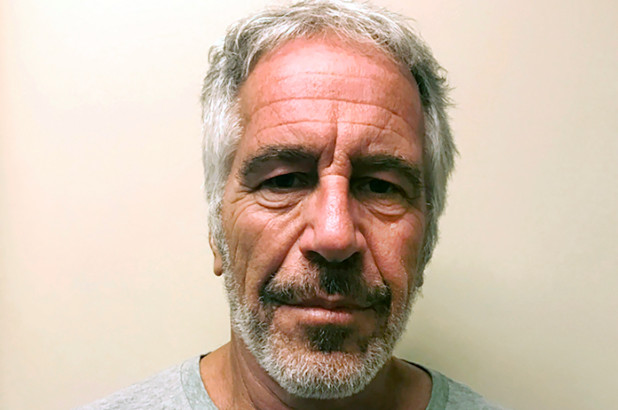
‘Epstein Didn’t Kill Himself’ printed on California brewery’s beer cans
The Jeffrey Epstein murder conspiracy is really brewing.
A California beer maker is selling a special, limited batch with “EPSTEIN DIDN’T KILL HIMSELF” printed on the bottom of its cans.
Tactical Ops Brewing started printing the special message Wednesday on the blue cans for the Freso-based firm’s Basher Oatmeal Stout.
Manager Carlos Tovar told Fox 26 that he got the idea about a week ago — which would have been when famed pathologist Dr. Michael Baden made international headlines by insisting Epstein’s autopsy “points toward homicide rather than suicide.”
Tovar said the Epstein conspiracies are “a big thing right now” — with his beer-can phrase exactly the same words as a former Navy SEAL blurted out at the end of an unrelated TV interview, making him go viral.
The company joked on its Facebook page that the boss’s dabbling in the conspiracy may see employees meeting the same shady endings.
“Tovar has sooooo got us all suicided. Lie and say nice things at our funerals,” the firm joked.
Only one batch — about 54 packs — will be made, the brewery told Fox 26.
Despite the latest uproar over Epstein’s death in his Manhattan lockup in August, New York’s chief medical examiner stood by her office’s ruling that the pedophile committed suicide. “We stand by the determination,” Dr. Barbara Sampson said.
via: https://nypost.com/2019/11/08/epstein-didnt-kill-himself-printed-on-california-brewerys-beer-cans/
Photo Credit: AP

Teenager stabbed to death while attending council-run knife awareness course for young offenders
The teenager stabbed to death at Hillingdon Civic Centre was attending a council-run knife awareness course for young offenders, police have revealed.
Hakim Sillah, 18, was killed after a fight broke out during the event in Uxbridge, west London, on Thursday.
The sixth-form student suffered a critical stab wound and died less than an hour after being airlifted to hospital. A 17-year-old boy was arrested and remains in custody.
Another 17-year-old, who was stabbed as he stepped in to break up the fight, was treated in hospital and has been discharged. Officers hailed his bravery as “amazing”.
DCI Noel McHugh, who is leading the investigation, revealed yesterday that the boys were young offenders and the Met Police confirmed they were attending a course designed to tackle knife crime.
He said he was not aware of any security present at the event or if the teenagers were searched for weapons. The knife used in the attack has not yet been recovered.
Selina Clarke, 18, from West Drayton, who went to secondary school with Hakim, said the council should have made sure there were no weapons being carried by people attending the course.
“They cannot have been searched properly otherwise they would have seen the knife,” she said. “It is so simple to put checks in place like a pat down or a metal detector that could have stopped it.”
DCI Hugh said: “It was a group session and a very quick altercation occurred between two individuals which resulted in one mail sustaining a knife injury which would cost him his life.
“My understanding is that it was a council event and there was no screening process but my understanding is that they would have carried out their own risk assessments. I wasn’t there, they may have done.”
DCI Hugh said the victim’s family were “absolutely broken” and that “it doesn’t feel real” for them.
Hakim, who was “always smiling and positive”, played football for his school team and had been awarded an apprenticeship to become an electrical engineer, friends said.
Hillingdon Council told The Daily Telegraph: “The matter is being investigated by the police and we are unable to comment further at this time. Our thoughts are with the victim’s family.”
Prime Minister Boris Johnson wrote on social media: “Very sad news from Uxbridge last night. My thoughts are with the victim’s friends and family.”
via: https://currently.att.yahoo.com/news/teenager-stabbed-death-while-attending-174330467.html
Photo Credit: SWNS

Popeyes employee caught allegedly selling chicken sandwiches as side hustle
Less than a week after it restocked its famous chicken sandwich, Popeyes has already seen the destruction of a car, a man screaming the N-word, numerous fights, and even a death. Now, an employee selling sandwiches as a side hustle can be added to that list.
TMZ got its hands on a video that shows Popeyes employees fighting behind the counter of one of its Los Angeles, California locations. Screaming can be heard in the video, as someone yells, “You fucking hit me, bitch!”
A source told TMZ that the incident started after one employee was caught selling the chicken sandwiches on the side. Multiple employees came together to fight the employee in question.
This happened not even a week after the fatal stabbing at a Popeyes in Maryland, an incident a Popeyes spokesperson described as a “tragedy.”
“We are saddened to hear about this senseless act of violence,” the spokesperson said in a press statement. “We, along with the franchisee, are fully cooperating with local authorities and actively working to gather more information.”
Of course, people have been talking about how great the sandwich is, or Justin Bieber who tried out the sandwich, and deemed it was “not worth the hype” on Instagram.
Despite all the madness it has caused, TMZ reports that Popeyes will not be removing the chicken sandwich from the menu.
via: https://www.dailydot.com/unclick/popeyes-employee-selling-sandwiches-fight/
Photo Credit: Dominic-Madori Davis
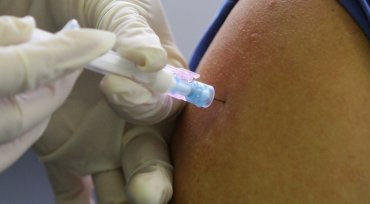
10 hospitalized after insulin administered instead of flu shots
OKLAHOMA — Ten people at a care facility in Oklahoma were hospitalized after they were injected with insulin instead of a flu shot, police said.
Eight of the patients were residents of Jacquelyn House and two were employees, Sgt. Jim Warring, with Bartlesville Police Department told CNN. The facility serves intellectually and developmentally disabled people, according to the website of AbilityWorks, the company that owns the eight-resident site.
EMS and fire crews responding Wednesday afternoon “found … multiple unresponsive people,” police Chief Tracy Roles said during a news conference covered by CNN affiliate KTUL.
Most patients’ suffering symptoms after the medication was administered “were not able to explain the issues,” Warring said. “Many of them are not vocal and not able to walk.”
“All these people are symptomatic, lying on the ground, needing help, but can’t communicate what they need,” Roles said. “That’s why I give a lot of praise to the fire and EMS staff for doing an outstanding job of identifying the problem.”
The pharmacist who injected the insulin was a contractor and went to the facility on Wednesday to administer the flu shot to residents and employees, Rebecca Ingram, CEO of AbilityWorks of Oklahoma, said in a statement.
Ingram said all people who received the injection had reactions and were taken to Jane Phillips Hospital in Bartlesville.
Several remained hospitalized Thursday due to the long-acting insulin that was administered, police said.
Ingram didn’t discuss whether the residents and employees were injected insulin but said authorities were investigating the “cause of the reactions to the injections.”
“I’ve never seen where there’s been some sort of medical misadventure to this magnitude,” Roles said. “But again, it could have been a lot worse. Not to downplay where we are, but thinking about where we could be, it could certainly have been very, very tragic.”
Tony D. Sellars, director of communications for the Oklahoma State Department of Health, said his agency will review the facility’s report on the incident “to determine if we need to follow up or if their action was sufficient.”
“There is no reason to suggest at this point that the facility should have had a reasonable suspicion that this sort of error would occur or be preventable on their part,” Sellars said.
An investigation was still underway on Thursday.
via: https://pix11.com/2019/11/08/10-hospitalized-after-insulin-administered-instead-of-flu-shots/
Photo Credit: pix11.com

Student caught fire during chemistry teacher’s botched lab experiment
ATLANTA (AP) — A Georgia high school teacher presenting a flashy demonstration to get her students excited about chemistry made a mistake that caused a fire to burn “out of control” and seriously injure a teenager in the front row, a school district report released Wednesday says.
Malachi McFadden, 16, suffered third-degree burns on his face, neck and torso and was hospitalized after his chemistry teacher bungled the “burning money demonstration” at Redan High School, just outside Atlanta, on the second day of his junior year, his lawyers said. On Wednesday, they released a report by an investigator for the DeKalb County school system that uses witness statements from students and teachers to piece together what happened Aug. 6.
Teacher Bridgette Blowe wrote in a statement included in the report that she’s successfully done the demonstration — lighting an accelerant-soaked bill on fire — in previous years and for two other classes this year. In this particular class, the flame didn’t burn out completely, Blowe wrote, “so I attempted to extinguish the flame with water, but I reached for the alcohol instead, by mistake.”
The report dated Oct. 21 says Blowe violated district standards and that Regional Superintendent Sean Tartt recommended Blowe be fired, but Principal Janice Boger recommended she be suspended and receive training on classroom safety.
The school district said Wednesday that Blowe is on administrative leave with pay, that no disciplinary action has been taken and the district is “reviewing training and safety protocols for its science labs.”
In a letter included in the report, Boger called Blowe a good teacher who, in this case, “made an awful mistake.”
L. Chris Stewart, a lawyer for McFadden, said they will likely end up suing for damages to cover his pain and suffering, as well as past and future medical costs, including plastic surgery.
“The only thing for them to do is to accept responsibility for it,” Stewart said of the school district.
The demonstration Blowe was attempting is popular on the internet and the premise is simple: Soak paper money in a mixture of water and alcohol, light it and amaze your friends when the bill comes through unharmed. But numerous videos also show the experiment going horribly wrong.
Blowe had tried to do the experiment the first day of classes using a mixture of water and alcohol, but it didn’t work, according to witness statements.
She tried the demonstration again the next day using a mixture of water and ethanol. After soaking a $5 bill and lighting it, she put it in a bowl and “added more ethanol to make the flame bigger,” the investigator concluded. That “caused the flame to become out of control,” spread across the lab table and burn McFadden, who had his head down.
Blowe said the glassware was mislabeled, but the report says it was unclear whether she was trying to put the fire out or “trying to make the flames larger so that students could see the flame.” The investigator wrote that it was “inconclusive as to whether or not Ms. Blowe’s use of water or alcohol was accidental.”
Reached by phone Wednesday, Blowe declined to comment.
McFadden told The Associated Press in a September interview that his hands still hurt constantly and he misses playing baritone saxophone in the band along with playing football and basketball. He hopes to return next semester.
He likes math and wants to be an engineer but has never really liked science. He’ll have to take chemistry next year to graduate but said he feels nervous about that.
News outlets across the country have reported about students injured in chemistry class demonstrations in recent years, including one at a Manhattan high school that caused burns over about 31% of a student’s body in 2014. In July, a jury awarded that student nearly $60 million in damages for past and future pain and suffering.
The problem isn’t new, said Ken Roy, chief safety compliance adviser for the National Science Teaching Association. There’s no national database that tracks such accidents, but Roy said he has anecdotal knowledge of at least 30 since the late 1990s that have ended up in court after students were seriously injured.
It may seem like there are more now because word spreads quickly on social media. That has prompted professional associations to step up their efforts to disseminate warnings and provide safety information for educators, Roy said.
“A science laboratory is a dangerous place,” Roy said. “There’s always going to be accidents, but of course you can make it safer to dramatically reduce that.”
Blowe, 36, had worked at Redan since August 2016 and previously as a science teacher at two other DeKalb County high schools from August 2007 through June 2013, according to school system employment records obtained by the AP through an open records request. The system declined to release performance reviews because they are confidential under state law.
While a student at Georgia Southern University, Blowe worked as a teaching assistant in the chemistry department, according to an employment application. Among the responsibilities she listed: “Made sure all laboratory procedures were run safely and properly.”
Photo Credit: AP Photo/Kate Brumback
Medical device used during labor falls out of patient 10 weeks later
As Laura Jokinen made her way home from a walk with her newborn son in October 2018, the shooting pain she’d been experiencing in her abdomen for weeks became unbearable.
She limped home and buckled to the floor, screaming for her husband to help.
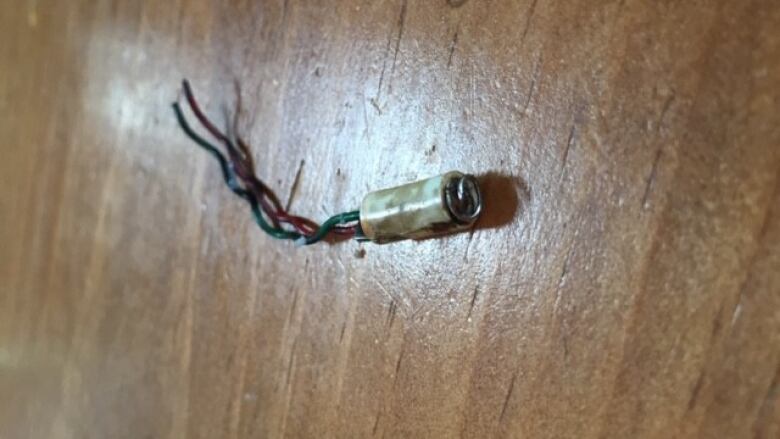
“It was at that point I reached down and felt a metal device protruding out of my vagina,” said Jokinen, who works in health care as a risks assessment researcher.
“I freaked out … I didn’t know what the device was or where it came from. It looked almost like a battery, and there were wires that were running up inside me. I was afraid to remove it, because I wasn’t sure if it was attached to my insides.”
The experience points to alarming statistics. Canada saw a major jump — 14 per cent over the last five years — in the number of medical items left inside patients after procedures, according to a study released Thursday by the Canadian Institute for Health Information (CIHI), a not-for-profit group that collects data on the quality of health care in the country.
CIHI said 553 such objects were left inside patients over the last two years.
Canada has the highest rate among developed countries of medical items being left inside patients, according to a separate study from the Organization for Economic Co-operation and Development (OECD).
That means medical teams across the country need to do a better job of following existing safety procedures, according to Sandi Kossey, senior director of the Canadian Patient Safety Institute (CPSI), a not-for-profit healthcare watchdog.
“There are checks and balances that should happen,” said Kossey. “There are enough preventative measures that should be in place, that these things should not happen.”
Jokinen, who lives in Parksville, B.C., had to have an emergency caesarean section on Aug. 11, 2018, at the Nanaimo General Hospital.
Before surgery, the medical team attached an electrode to the baby’s head while he was still in the womb to monitor his heartbeat.
Part of the monitor was removed during the C-section. But the medical team forgot to take out the rest.
Two weeks after Jokinen was discharged, she started having complications: an infection of her surgical incision and heavy, prolonged vaginal bleeding.
Her doctors prescribed antibiotics but didn’t detect what had been left inside her. It remained there for 10 weeks until it dislodged.
Jokinen tried to find out, through the regional health authority, what the monitor was made of and how the mistake might have affected her health and that of her baby.
“At that point, he was two months old and I was breastfeeding, so I was really concerned about what risks this posed to his health,” Jokinen said.
Jokinen says she was on pins and needles for more than a month waiting to hear back. The response she finally got, she says, was less than helpful.
The Vancouver Island Health Authority told her even the manufacturer couldn’t say what the effect might be since the device was only designed and tested for use over periods of 24 hours or less.
It said it looked at devices made of similar materials and didn’t believe there were any long-term risks to Jokinen or her baby from the breakdown of the components.
Jokinen says she wanted the health authority to take responsibility, but it refused, saying the failure was by the surgeon who is an independent contractor and not an employee.
“Physicians in B.C. are independent contractors who are licensed and regulated by the College of Physicians and Surgeons of B.C.,” the authority said in an email to Go Public.
Jokinen said she was surprised by the health authority’s reaction.
“They’re responsible for their subcontractor’s actions and … providing safeguards to make sure that people aren’t harmed.”
Kossey, at the CPSI, agrees. “Certainly, they are responsible for what happens under their watch and within their facility,” she said.
Jokinen chose not to pursue action against the surgeon.
Go Public reached out to HealthCareCAN, an organization that represents hospitals across Canada, for comment but did not immediately hear back.
‘Systemic flaw’
According to the most recent report on the quality of healthcare in OECD countries, a foreign body — sponges, needles, clamps, scissors, etc. — is left inside a patient in Canada 9.8 times out of every 100,000 surgeries. That’s three times the average.
The next-highest OECD results were Sweden at 8.3 followed by Netherlands with 4.6 per 100,000.
“The data shows that we’re not doing as good as we should be as a developed country,” Kossey told Go Public.
But she also suggests the reason Canada appears to have more mistakes could be in the accuracy of the reporting itself.
“Some of the other countries … being compared against may have different cultures around how they’re collecting and using that information … it’s a bit of a mixed signal,” she said.
Kossey says medical teams need to ensure they do an appropriate inventory of equipment used during all procedures and to communicate clearly with the patient and family members — even in the most chaotic situations — what’s being done so there are no surprises.
Jokinen was surprised to hear how often something goes wrong. “That points at a systemic flaw in our healthcare system,” she said.
“In order to address that, we need to first acknowledge that it’s happening. The health authorities need to take responsibility for the actions of their subcontractors and they also have to come up with a mitigation plan to avoid these types of events,” she said.
The Vancouver Island Health Authority told Jokinen it has made changes. Non-surgical devices like the monitor that was left inside her were added to a checklist of items that need to be retrieved after medical procedures.
“We deeply regret that this patient had a poor care experience and we sincerely apologize to her,” a spokesperson wrote in its email to Go Public.
via: https://www.cbc.ca/news/health/fetal-monitor-left-inside-surgical-medical-error-1.5349111
Photo Credit: Laura Jokinen

A 10-year-old boy was shot in the head while walking home from school
A 10-year-old boy walking home from school in Philadelphia was critically injured Wednesday when he was shot in the back of the head by a stray bullet, according to police.
Philadelphia police said a man involved in the shooting has been arrested, but the gunman remains on the loose, CNN affiliate KYW reported.
Authorities said Semaj O’Branty was not the intended target, KYW reported. He was walking home from school in Frankford around 3:30 p.m. when police say a man driving a red Pontiac G6 fired at the man in custody, who tried to shield the boy and fired back, the station reported.
“He tries to cover the kid and protect the kid, but the kid takes a shot,” Philadelphia Police Capt. John Walker said, according to the station.
The shooting comes just weeks after a 2-year-old girl was killed and an 11-month old critically wounded in two separate shootings. So far this year, there have been more than 300 homicide victims in Philadelphia, according to statistics by Philadelphia police. It’s the highest number since 2007.
CNN has reached out to the Philadelphia Police Department.
“I heard about anywhere from 11 to 13 shots, right in a row,” Harry Stork told the station. “Next thing I knew, there was a lady down the street holding the boy’s back of his head and they rushed him off to the hospital.”
Semaj was transported to St. Christopher’s Hospital for Children. He is currently in critical condition, but doctors say he is stable and expected to survive, the station reported.
via: https://currently.att.yahoo.com/att/10-old-boy-shot-head-102955578.html
Photo Credit: KYW / KYW